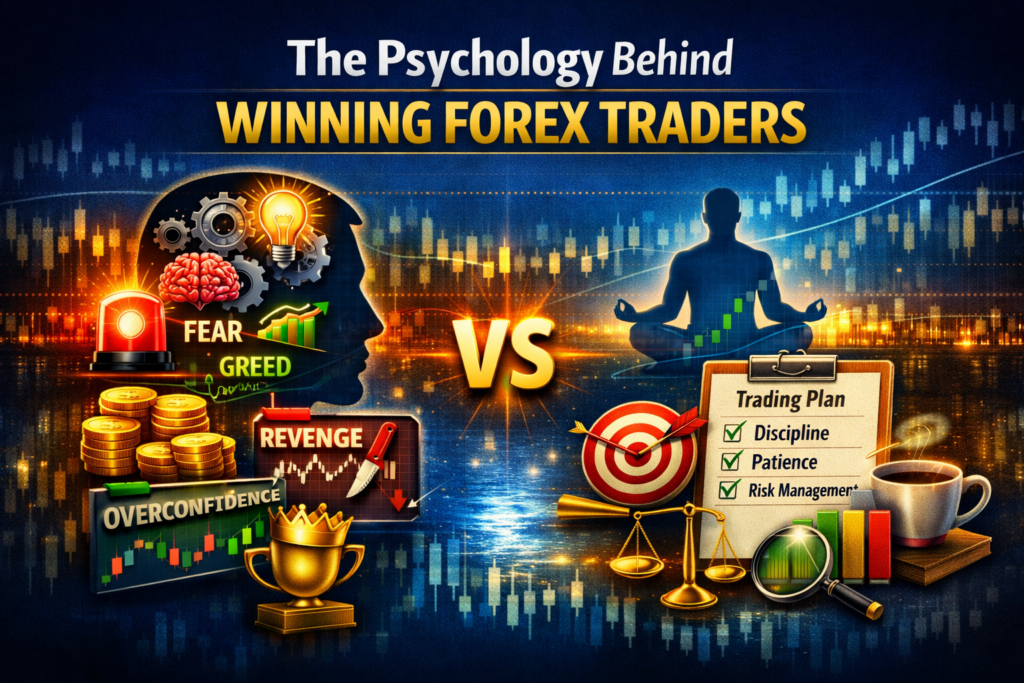
Forex Trading Psychology: The Psychology Behind Winning Forex Traders. Why Psychology Matters More Than Strategy
Every trader starts by chasing the perfect strategy — but the truth is, psychology determines performance far more than strategy. Two traders can use the same system and get completely different results. The difference lies in how they think, react, and manage emotions under pressure. mastering Forex Trading Psychology will give you the edge to be successful.
Trading psychology is the invisible edge that turns technical knowledge into consistent profitability. Without it, even the best setups fail.
Emotional Biases That Destroy Traders
The forex market doesn’t punish lack of knowledge — it punishes emotional decisions. Here are the most common psychological traps:
1. Fear
Fear makes traders exit too early or avoid valid setups. It’s the emotion behind missed opportunities and premature exits.
2. Greed
Greed pushes traders to over‑leverage, chase losses, or hold trades too long. It’s the root of blown accounts.
3. Revenge Trading
After a loss, many traders try to “win it back.” This emotional reaction leads to impulsive entries and bigger losses. Discover the art of forex trading psychology to master your emotions in currency trading.
4. Overconfidence
After a few wins, traders forget discipline. They increase risk, ignore rules, and lose focus — often wiping out previous gains.
Recognizing these biases is the first step toward mastering them.
Traits of Consistently Profitable Traders
Winning traders don’t just have good strategies — they have mental frameworks that keep them stable.
1. Patience
They wait for high‑probability setups and never chase price. Patience protects capital and improves win rate.
2. Discipline
They follow their trading plan precisely — even when emotions tempt them to deviate. Discipline is the bridge between analysis and execution.
3. Risk Awareness
They think in probabilities, not certainties. Every trade is just one outcome in a series — not a reflection of their skill or worth. These profitable traders have mastered the skill of forex trading psychology.
4. Emotional Control
They accept losses as part of the game. They don’t let wins inflate their ego or losses damage their confidence.
These traits are built through repetition, reflection, and self‑awareness.
How to Build a Strong Trading Mindset
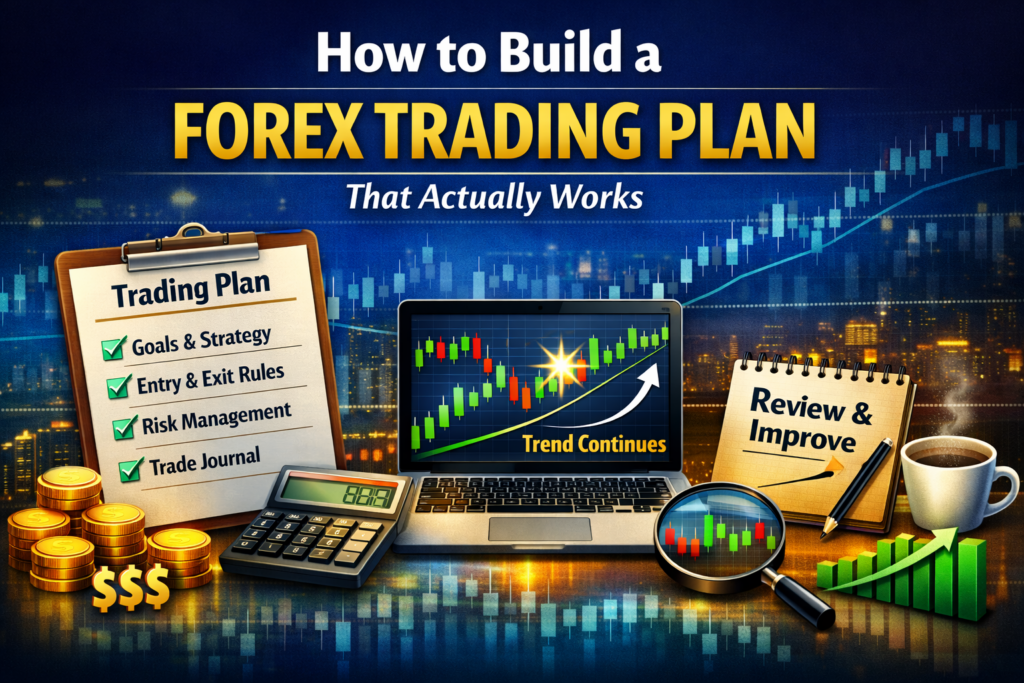
A strong mindset isn’t natural — it’s trained. Here’s how professional traders develop it:
1. Journaling Every Trade
Record not just technical details but emotions:
- What were you thinking before entry?
- How did you feel after exit?
- Did you follow your plan?
Patterns will emerge — and they’ll reveal your emotional weaknesses.
2. Routine Building
Create a consistent daily rhythm:
- Pre‑market analysis
- Trade execution window
- Post‑market review
Routine reduces randomness and builds confidence.
3. Post‑Trade Reflection
After each session, ask:
- Did I trade my plan or my emotions?
- What triggered my mistakes?
- What can I improve tomorrow?
Reflection transforms experience into wisdom.
Practical Psychology Exercises for Traders
These exercises help strengthen emotional control:
1. Visualization
Before trading, visualize executing your plan calmly — even during volatility. This primes your brain for discipline.
2. Breathing Control
Deep breathing resets your nervous system during stressful trades. It’s simple but powerful.
3. Loss Acceptance Practice
Simulate losing trades and rehearse your response. The goal: treat losses as data, not personal failure.
4. Detachment Training
Remind yourself: You are not your trades. This mental separation keeps your identity intact when markets fluctuate.
Final Thoughts on Mental Edge
Winning traders aren’t emotionless — they’re emotionally intelligent. They understand their triggers, manage their reactions, and stay consistent regardless of market chaos. They have the edge with forex trading psychology.
The market rewards those who can stay calm when others panic. Master your psychology, and you’ll master your trading.
Recommended Reading Links
- Psychology → Avoiding Emotional Trading
- Learn Forex → Risk Management Basics
- Tools → Trading Journals & Apps