The Role of Trading Psychology in Consistent Profits
Most traders believe success comes from finding the perfect strategy, indicator, or entry signal. But the truth is simple: your mindset determines your results far more than your strategy ever will.
Trading psychology is the emotional and mental framework that influences how you behave in the market. It affects your discipline, your patience, your risk decisions, and your ability to follow your plan — especially under pressure.
Most traders lose not because of strategy but because of emotions. Two traders can use the same strategy and get completely different results. The difference is psychology.
Why Trading Psychology Matters More Than Strategy
1. The market exposes your emotions
Fear, greed, impatience, frustration, and overconfidence all show up in your trading decisions. If you don’t control them, they will control you.
2. Consistency requires emotional stability
A strategy only works if you execute it the same way every time. Most traders fail because they break their own rules.
3. Losses are guaranteed – how you respond determines your future
Even the best traders lose. Your ability to stay calm, reset, and continue following your plan is what keeps you profitable long-term.
The Three Pillars of Trading Psychology
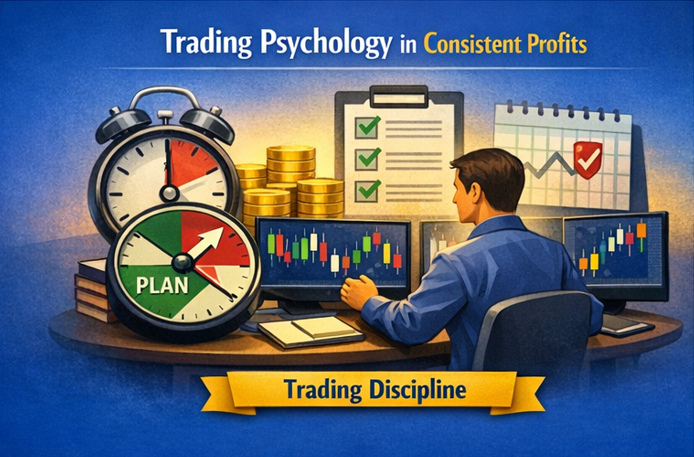
1. Discipline
Following your plan even when it feels uncomfortable. Discipline is the ability to follow your rules even when your emotions try to pull you in another direction.
Disciplined traders:
- Wait for their setups
- Use stop‑losses every time
- Avoid over‑trading
- Stick to their risk limits
- Follow their plan even after a loss
Discipline is not natural — it’s trained.
2. Patience
Patience is the ability to wait for high‑probability opportunities instead of forcing trades.
Impatient traders:
- Chase the market
- Enter early
- Exit early
- Take low‑quality setups
Patient traders:
- Let the market come to them
- Trade less but win more
- Avoid emotional decisions
Patience is a competitive advantage.
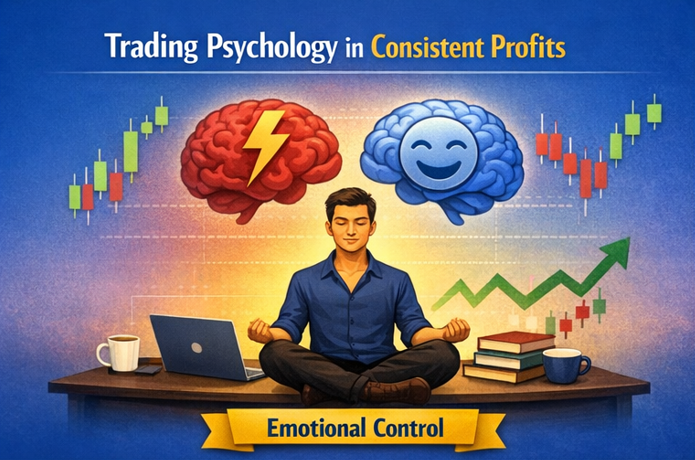
3. Emotional Control
Managing fear, greed, frustration, and overconfidence. Emotional control is the ability to stay calm and rational during wins, losses, and volatility.
Without emotional control:
- Wins lead to overconfidence
- Losses lead to revenge trading
- Volatility leads to panic
- Drawdowns lead to abandoning your plan
With emotional control:
You stay consistent
You think clearly
You manage risk properly
You avoid impulsive decisions
Common Psychological Challenges Traders Face
Fear of Missing Out (FOMO)
You see a move happening and jump in late. This usually leads to losses.
Revenge Trading
You take a loss and immediately try to “win it back”. This leads to bigger losses.
Over‑Trading
You take too many trades because you’re bored, excited, or frustrated.
Holding Losers Too Long
You hope the market will turn around. Hope is not a strategy.
Closing Winners Too Early
You fear losing the profit you’ve made. This destroys your risk‑to‑reward ratio.
Changing Your Plan Mid‑Trade
You move your stop‑loss, change your target, or add to a losing position. This is emotional trading.
How to Build a Strong Trading Mindset
1. Use a Trading Journal
A journal helps you track:
- Your emotions
- Your mistakes
- Your best setups
- Your worst habits
Over time, patterns become obvious — and fixable.
2. Set clear rules – Create Clear Trading Rules
Define your entry, exit, and risk parameters. Your rules should define:
- Entry criteria
- Exit criteria
- Risk per trade
- Maximum daily loss
- When to stop trading
Rules remove emotion from decision‑making.
3. Reduce screen time
Over‑watching charts increases emotional pressure. Watching charts for hours increases stress and impulsive behaviour.
Set alerts.
Step away.
Trade only when your setup appears.
4. Accept losses as part of the game
Even the best traders lose — consistently. Losses are not failures — they are data.
Your job is not to avoid losses.
Your job is to manage them.
Focus on Process, Not Outcome
You cannot control the market. You can only control:
- Your risk
- Your entries
- Your exits
- Your behaviour
When you focus on process, profits follow naturally.
The Psychology Behind Winning Traders
They think in probabilities
No single trade matters. Only the next 100 trades matter.
They detach emotionally from outcomes
A win doesn’t make them euphoric. A loss doesn’t make them angry.
They trust their system
They don’t jump between strategies. They master one approach.
They protect their capital
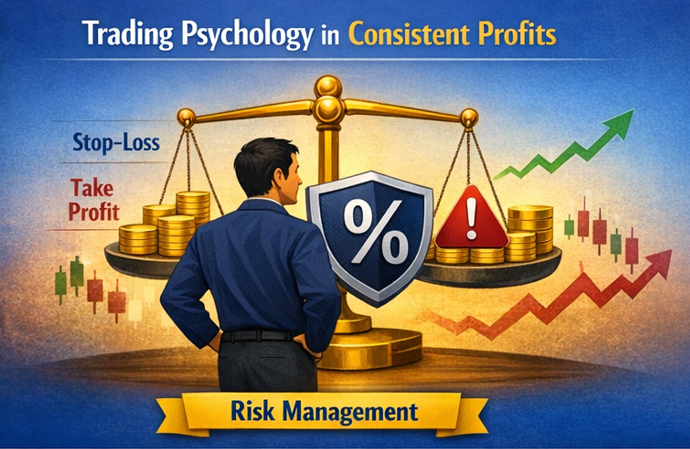
They know survival is the first goal. Growth comes after.
Practical Exercises to Improve Your Trading Psychology
1. Pre‑Trade Checklist
Before entering a trade, ask:
- Does this meet my rules?
- Is the risk acceptable?
- Am I trading emotionally?
2. Post‑Trade Review
After each trade, review:
- Did I follow my plan?
- What emotion did I feel?
- What can I improve?
3. Weekly Reflection
Look for patterns:
- What caused your losses?
- What caused your wins?
- What emotional triggers repeat?
4. Mindfulness & Breathing
Simple breathing exercises reduce stress and improve clarity.
Final Thoughts
Trading psychology is not optional — it is the foundation of consistent profitability. Your mindset determines whether you follow your plan, manage risk, and stay disciplined through wins and losses.
Master your psychology, and your strategy will finally work the way it was designed to.
Recommended Internal Links
- What Is Risk Management in Forex?
- How to Build Trading Discipline
- Trading Journal Template