Trading Psychology: Build the Mindset That Creates Consistent Traders - Master emotional control, discipline, patience, and confidence — the mental skills that separate long‑term winners from impulsive traders.
Why Trading Psychology Matters
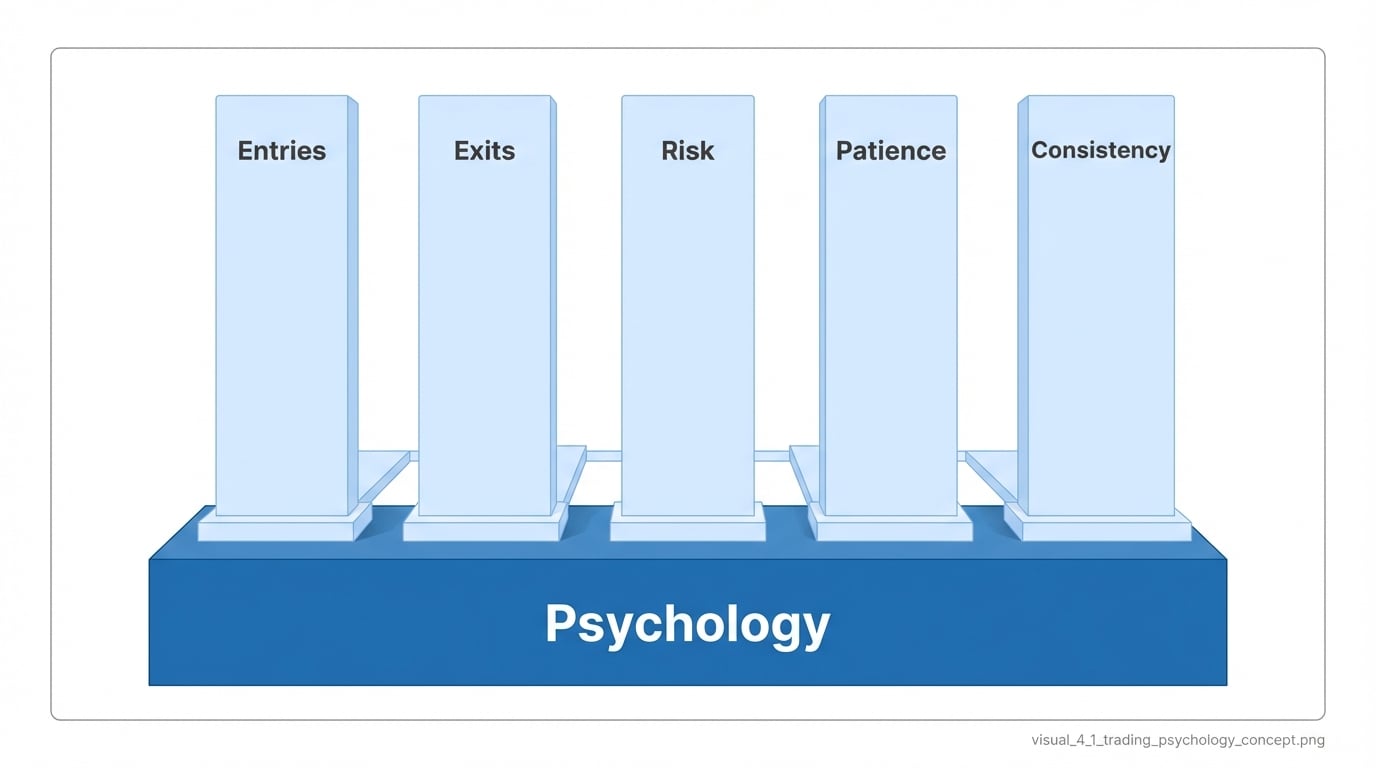
Most traders lose money not because they lack strategy, but because they lack discipline. Psychology is the invisible force behind every decision you make — entries, exits, risk, patience, and consistency.
In this guide, you’ll learn:
- how emotions influence your trading
- how to avoid impulsive decisions
- how to build discipline and confidence
- how to stay consistent through wins and losses
- how to create habits that support long‑term success
This is the foundation of becoming a stable, confident trader.
The Most Common Trading Emotions
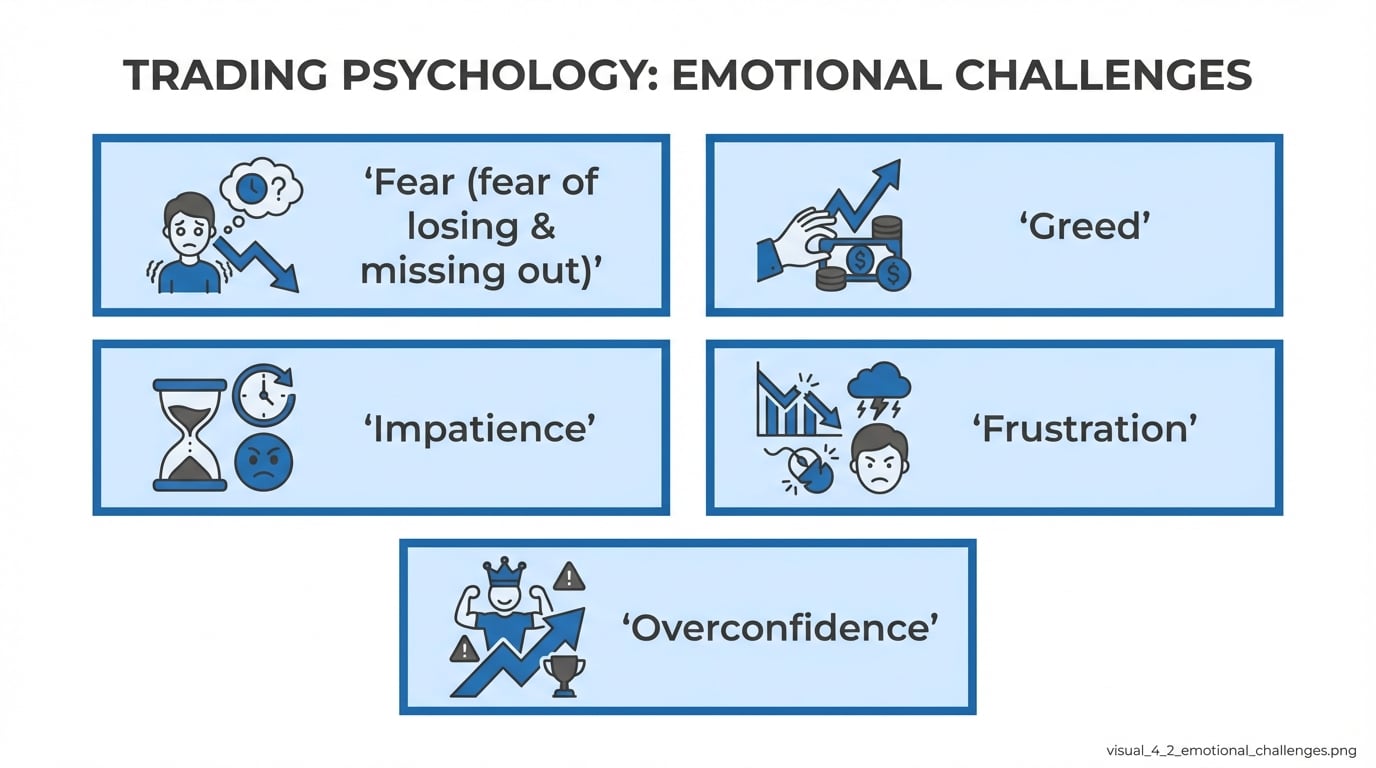
Every trader faces the same emotional challenges:
- Fear — fear of losing, fear of missing out
- Greed — chasing trades, over‑leveraging
- Impatience — entering too early, exiting too soon
- Frustration — revenge trading after losses
- Overconfidence — taking oversized risks after wins
This section helps traders recognize these emotions before they take control.
Discipline: The Core Skill of Every Successful Trader
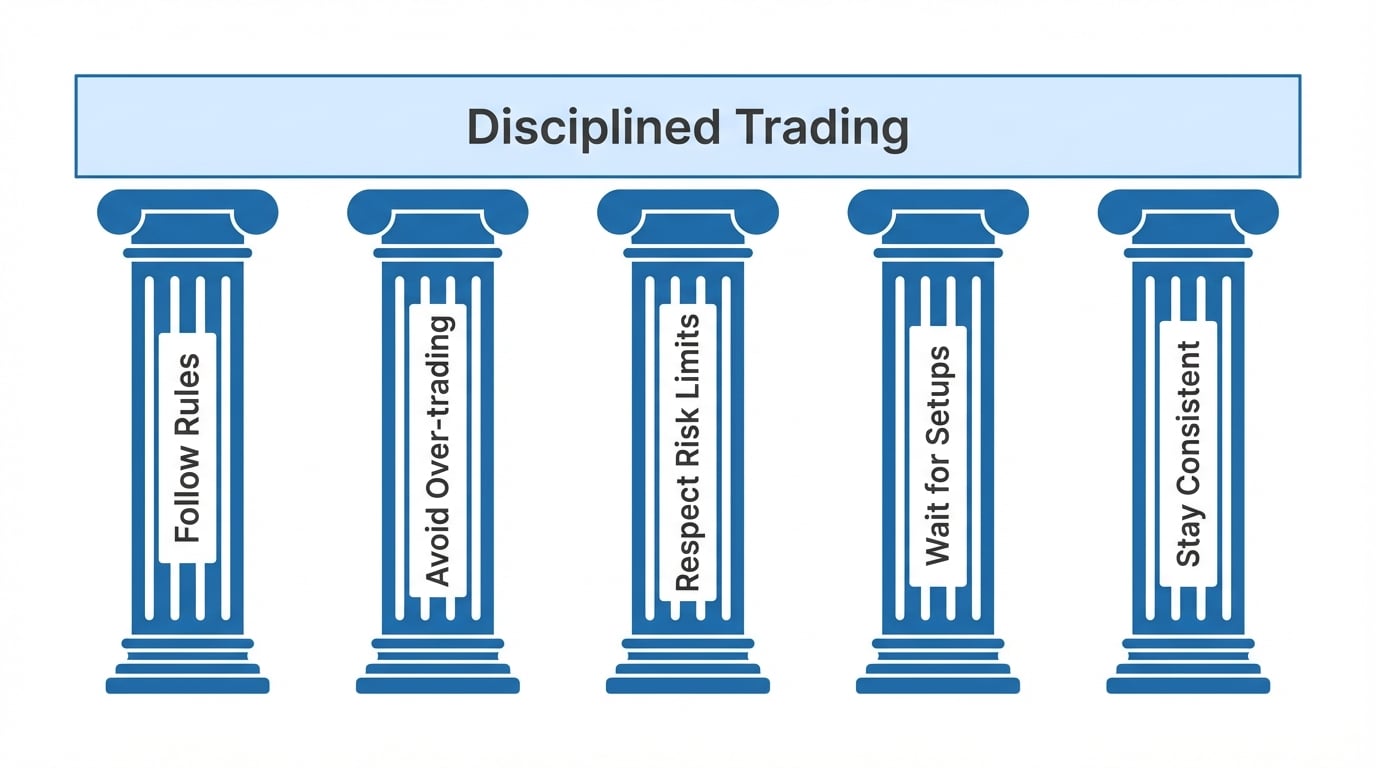
Discipline is the ability to follow your plan even when emotions try to pull you off track.
You’ll learn how to:
- stick to your rules
- avoid over‑trading
- follow your risk limits
- wait for high‑probability setups
- stay consistent during drawdowns
Discipline is a muscle — and this section teaches you how to build it.
Patience and Timing
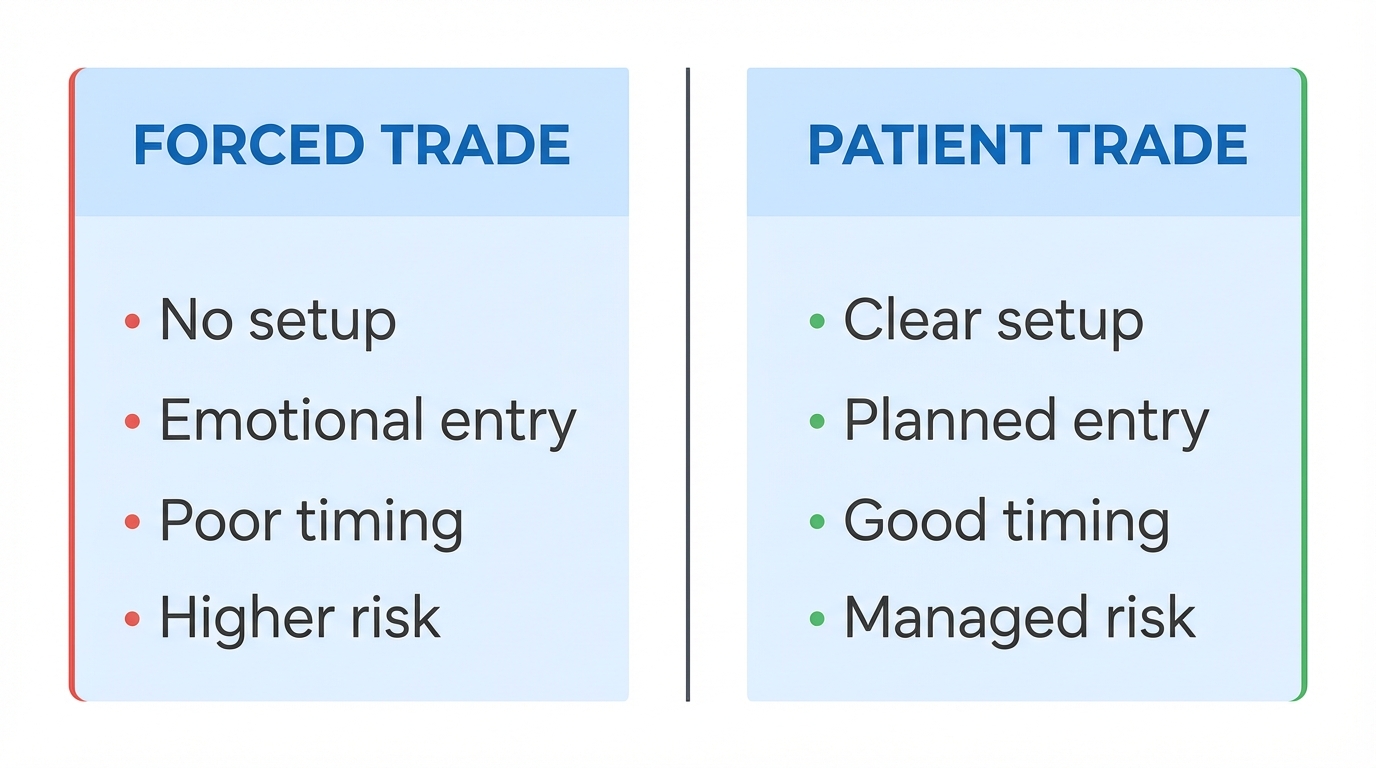
Patience is the difference between a forced trade and a profitable one.
You’ll learn how to:
- wait for confirmation
- avoid FOMO
- trust your strategy
- stay calm during slow markets
This section helps traders stop chasing and start waiting.
Confidence and Self‑Trust
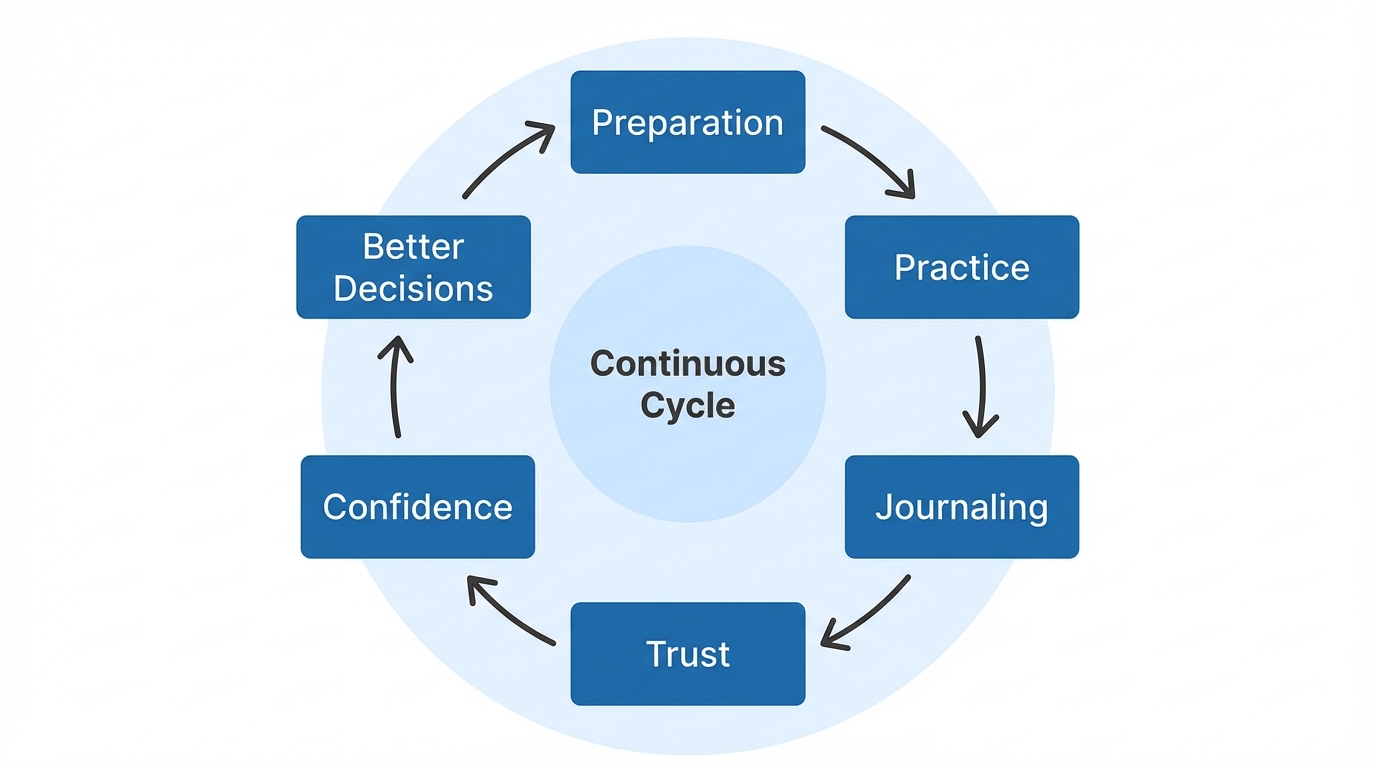
Confidence comes from preparation and repetition — not luck.
You’ll learn how to:
- build confidence through journaling
- trust your analysis
- avoid second‑guessing
- stay calm under pressure
This section helps traders develop a stable, grounded mindset.
Managing Losses (Without Losing Yourself)
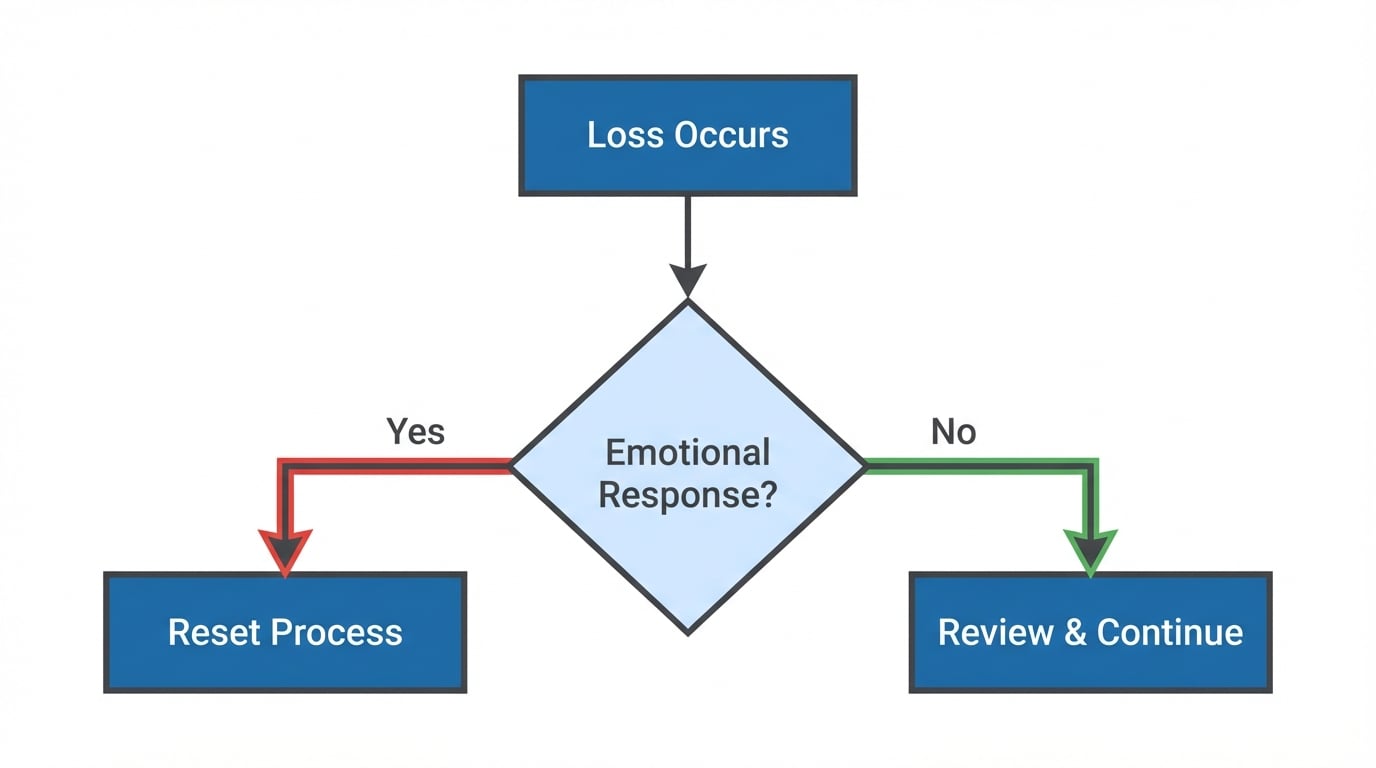
Losses are part of trading — but how you respond determines your long‑term success.
You’ll learn how to:
- avoid revenge trading
- reset after a losing streak
- protect your mental capital
- maintain perspective
This section teaches emotional resilience.
Building a Trading Routine
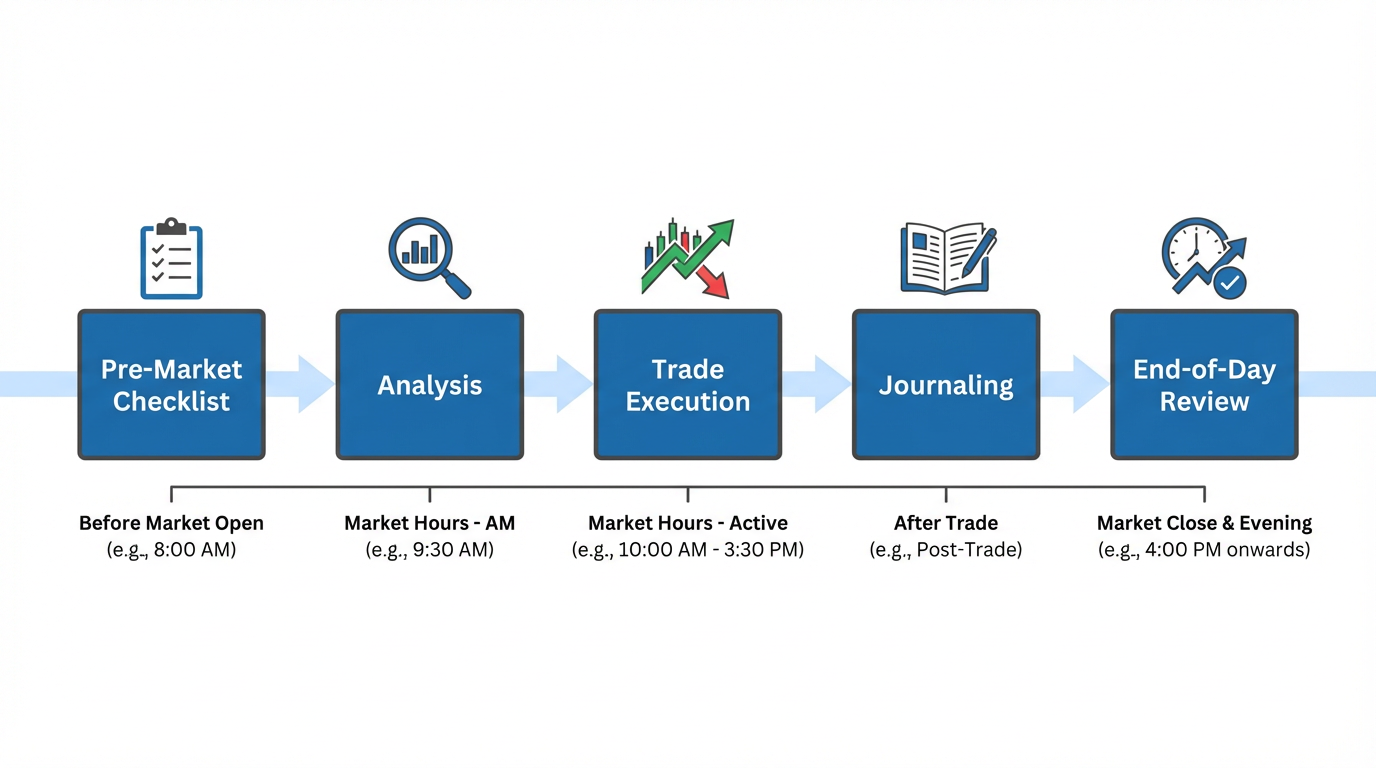
A strong routine creates consistency.
You’ll learn how to structure:
- your pre‑market checklist
- your analysis process
- your trade execution steps
- your journaling habits
- your end‑of‑day review
This section helps traders build habits that support long‑term growth.
Journaling and Self‑Review
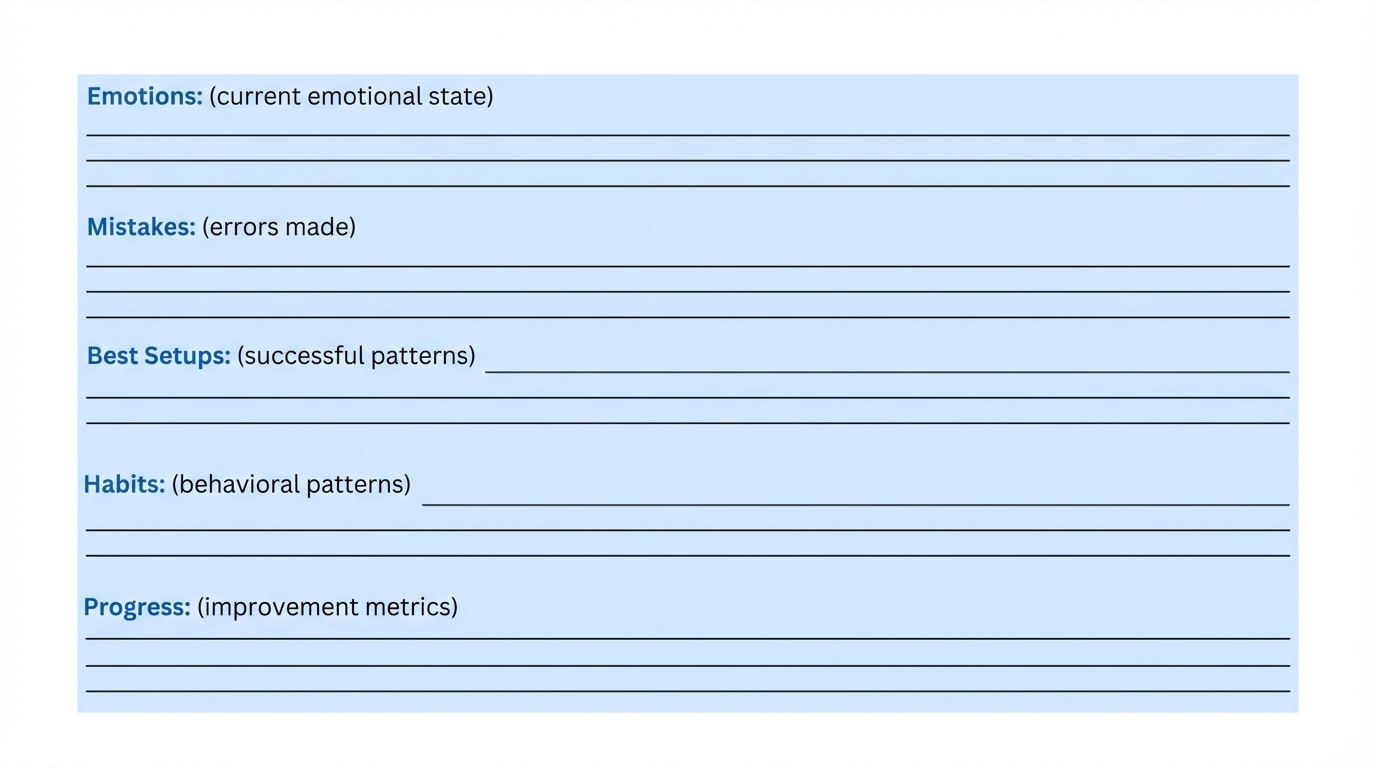
A trading journal is your most powerful psychological tool.
You’ll learn how to track:
- your emotions
- your mistakes
- your best setups
- your worst habits
- your progress over time
This section helps traders turn experience into improvement.
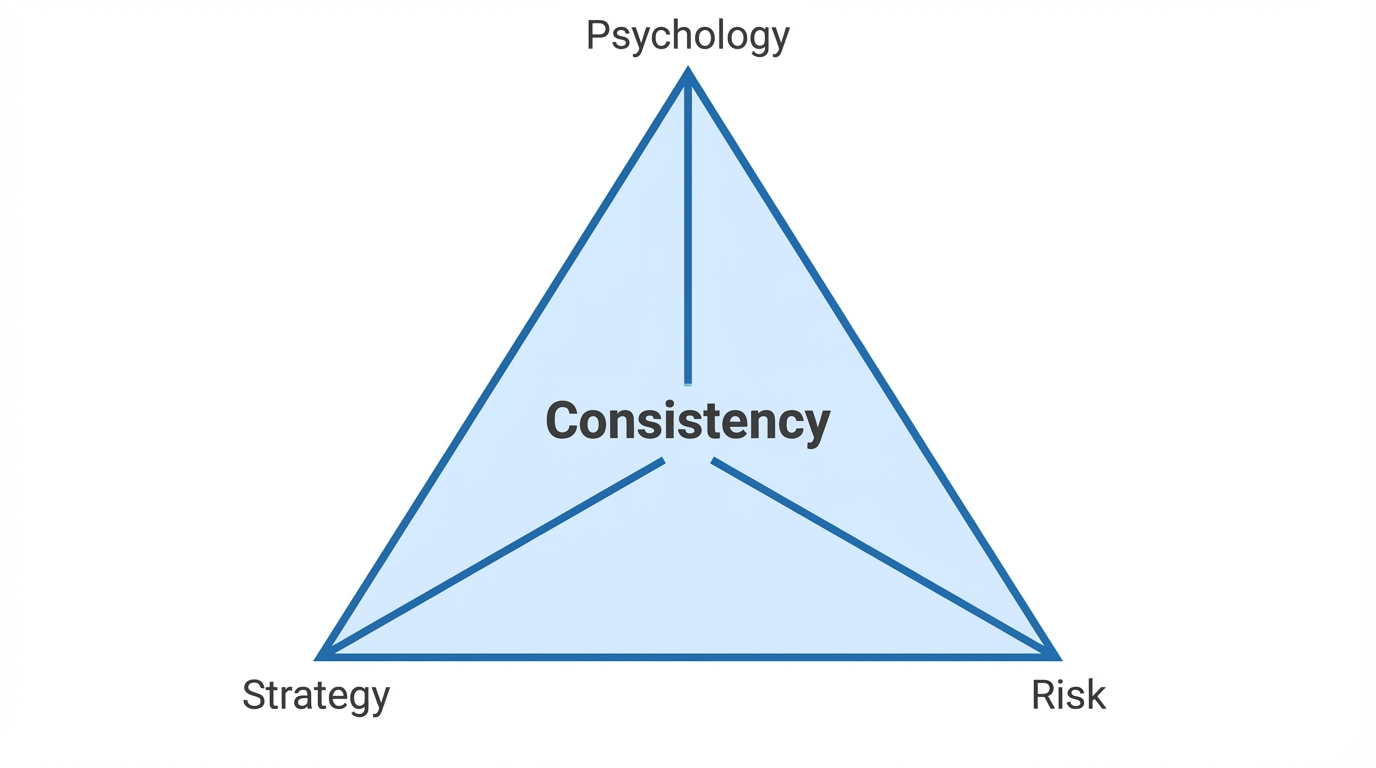
Psychology + Strategy + Risk = Consistency
Psychology doesn’t replace strategy — it supports it.
You’ll learn how to combine:
- technical analysis
- fundamental analysis
- risk management
- emotional discipline
This creates a complete, balanced trading approach.
Internal Link: → Explore our Technical Analysis Guide → Learn more in our Fundamental Analysis Guide
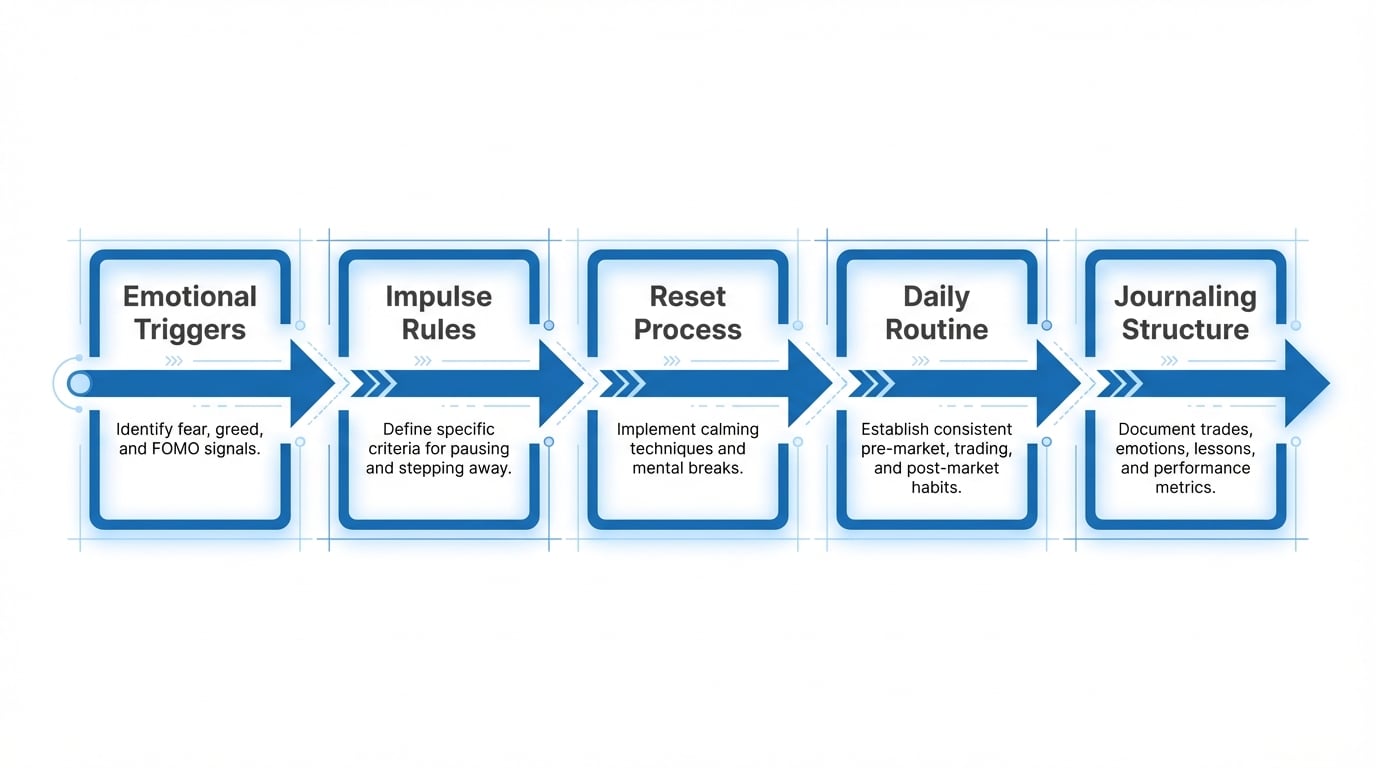
Building Your Psychological Trading Plan
A psychological plan includes:
- your emotional triggers
- your rules for avoiding impulsive trades
- your reset process after losses
- your daily routine
- your journaling structure
This section helps traders create a mental framework they can rely on.
Next Steps (CTA)
You now understand the mental skills that support consistent trading. Your next step is to combine psychology with strong technicals, fundamentals, and risk management.
CTA Buttons:
Return to Learn Forex
Start Technical Analysis
Learn Fundamental Analysis
Explore Trading Tools
Compare Forex Brokers