Technical Analysis: Learn How to Read Price Action and Identify High‑Probability Setups - Master the tools, patterns, and principles traders use to understand market structure, spot opportunities, and time entries with confidence.
What Is Technical Analysis?
Technical analysis is the study of price action. Instead of focusing on economic data, you analyze how price behaves on the chart — trends, patterns, momentum, and key levels.
In this guide, you’ll learn:
- how to read charts with clarity
- how trends form and reverse
- how to use indicators effectively
- how to identify high‑probability setups
- how to combine technicals with fundamentals
This is the foundation of timing your trades with precision.

Understanding Price Action
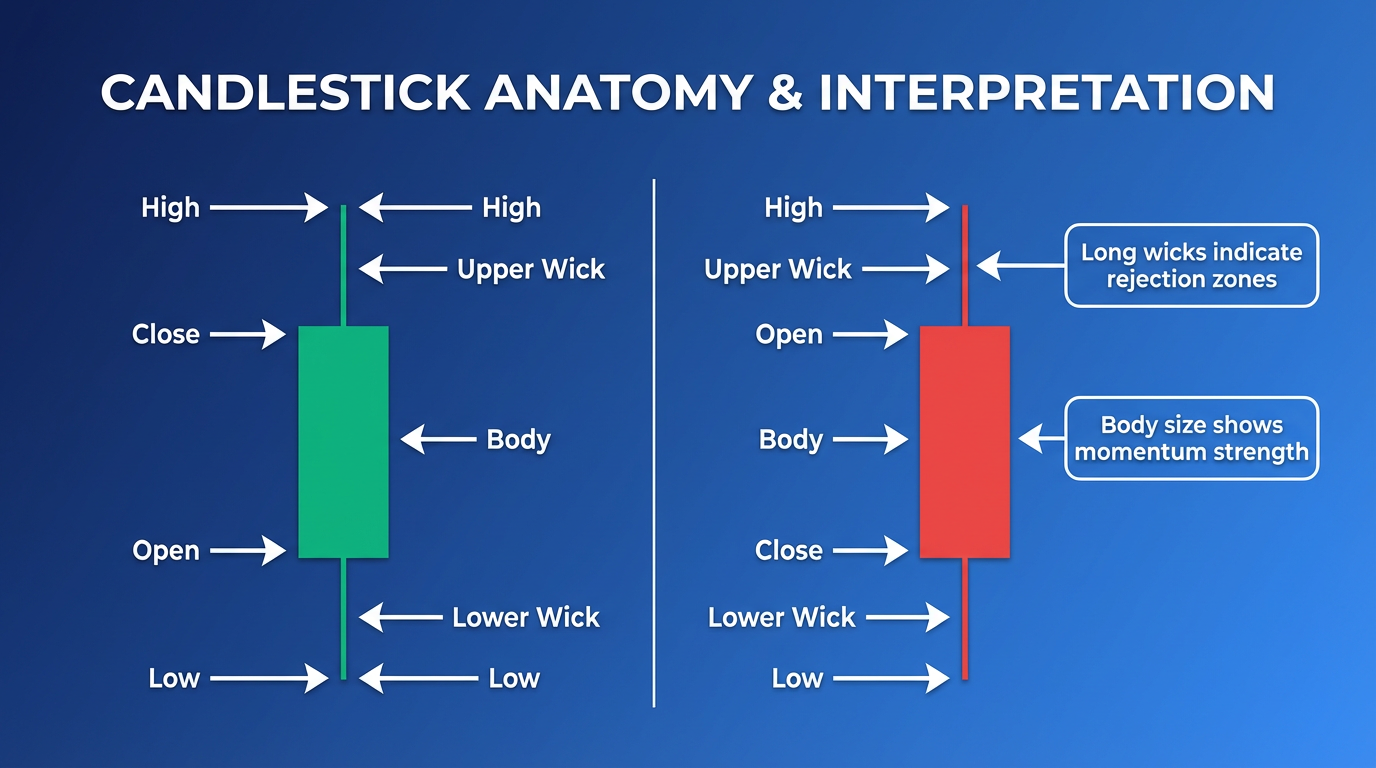
Price action is the purest form of technical analysis. It reflects the collective decisions of buyers and sellers.
You’ll learn how to interpret:
- candlestick structure
- wicks and bodies
- momentum shifts
- rejection zones
- volatility changes
This section helps you “read” the market without relying on indicators.
Market Structure (The Backbone of Technicals)
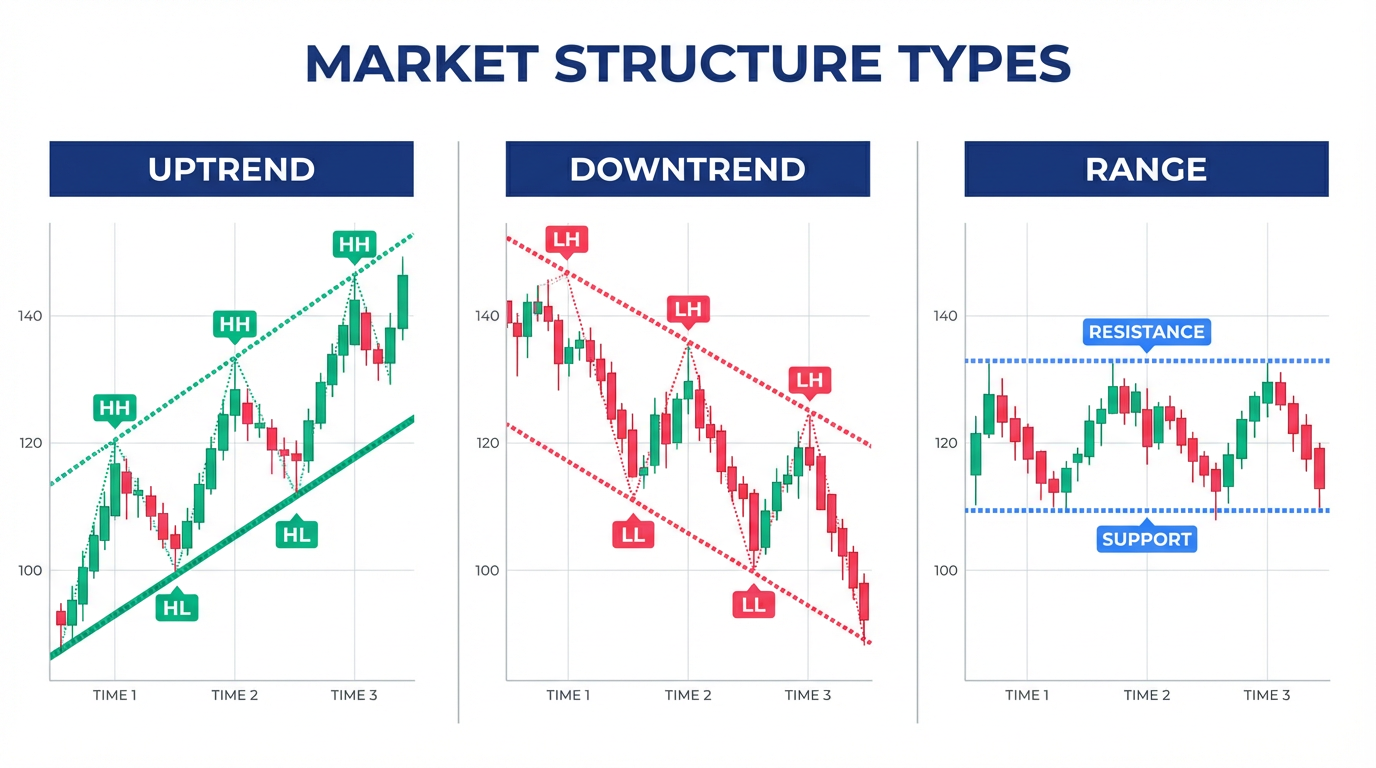
Market structure tells you what the market is doing right now.
You’ll learn to identify:
- uptrends (higher highs, higher lows)
- downtrends (lower highs, lower lows)
- ranges (sideways consolidation)
- breakouts and fakeouts
- trend reversals
Understanding structure helps you avoid trading against the market’s direction.
Support and Resistance
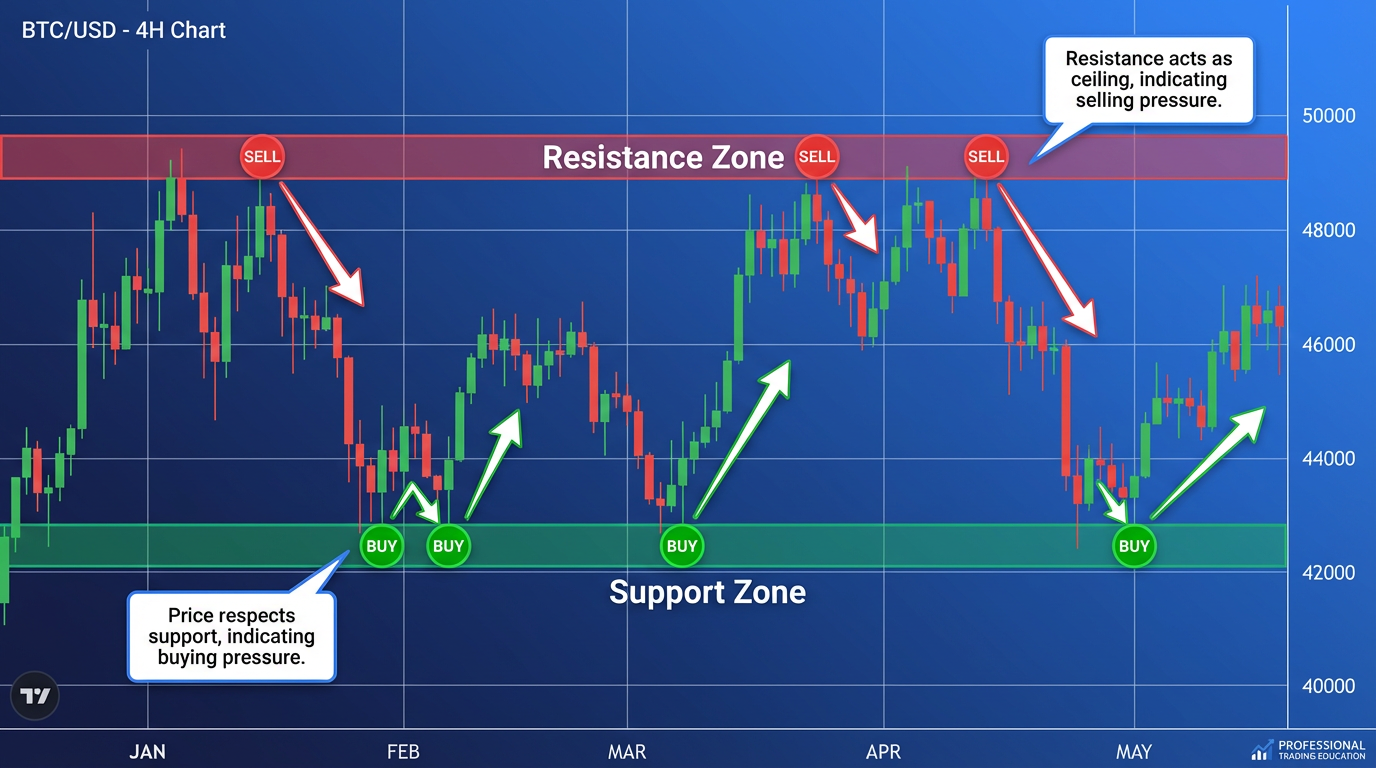
Support and resistance are the most important levels on any chart.
You’ll learn how to:
- identify strong levels
- spot liquidity zones
- use levels for entries and exits
- avoid false breakouts
- combine levels with candlestick signals
These levels form the foundation of most trading strategies.
Candlestick Patterns
Candlesticks reveal market psychology.
You’ll learn the meaning behind:
- engulfing patterns
- pin bars
- dojis
- inside bars
- morning/evening stars
These patterns help you spot reversals, continuations, and momentum shifts.
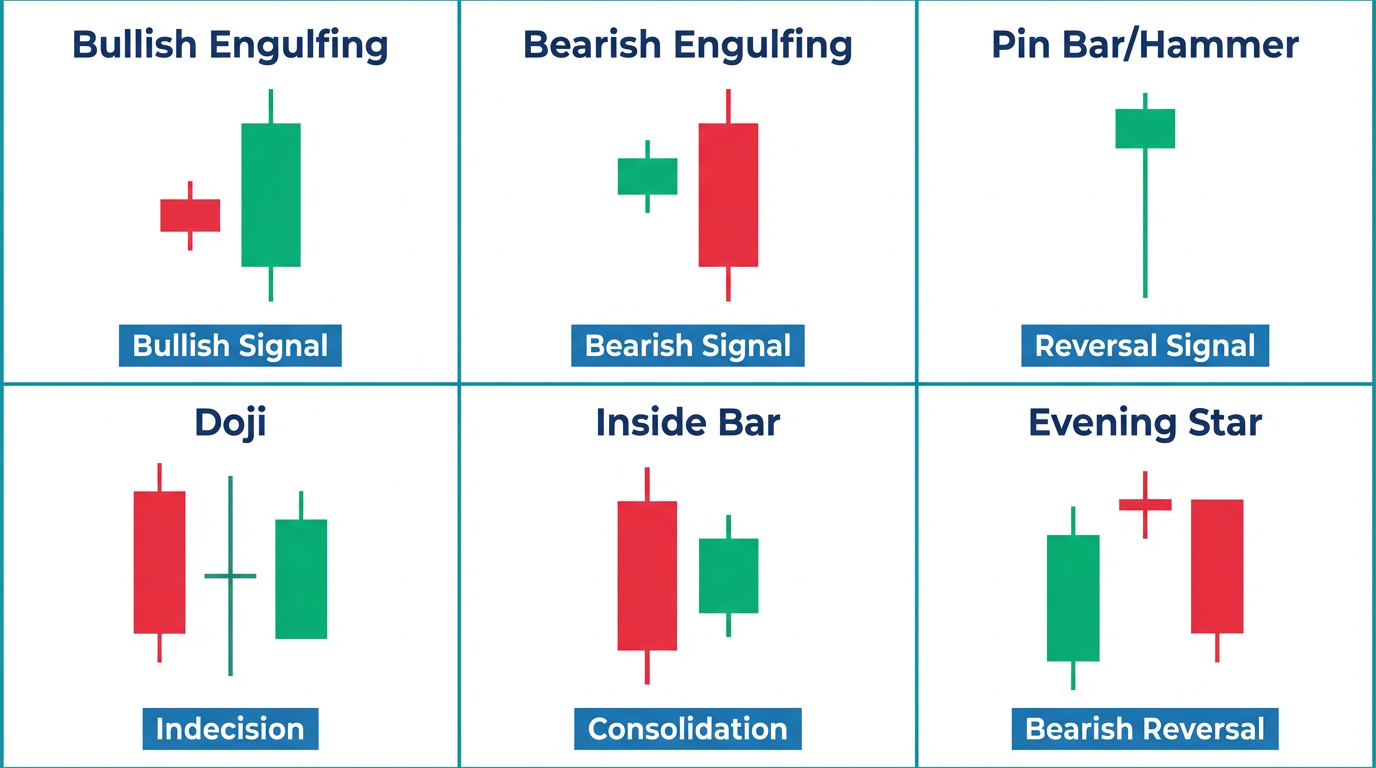
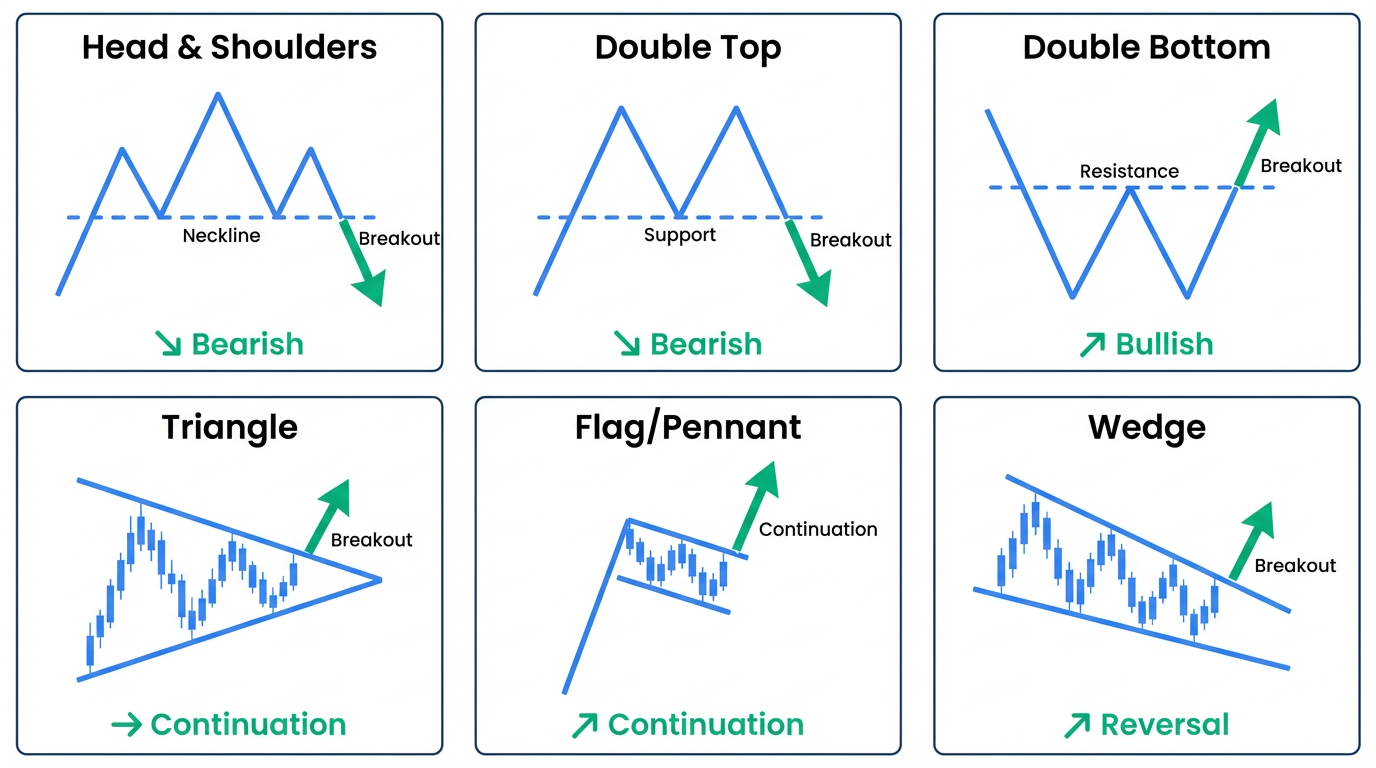
Chart Patterns
Chart patterns help you anticipate future price movement.
You’ll learn:
- head and shoulders
- double tops/bottoms
- triangles
- flags and pennants
- wedges
Patterns give structure to your analysis and help you plan trades in advance.
Indicators (Use Them Wisely)
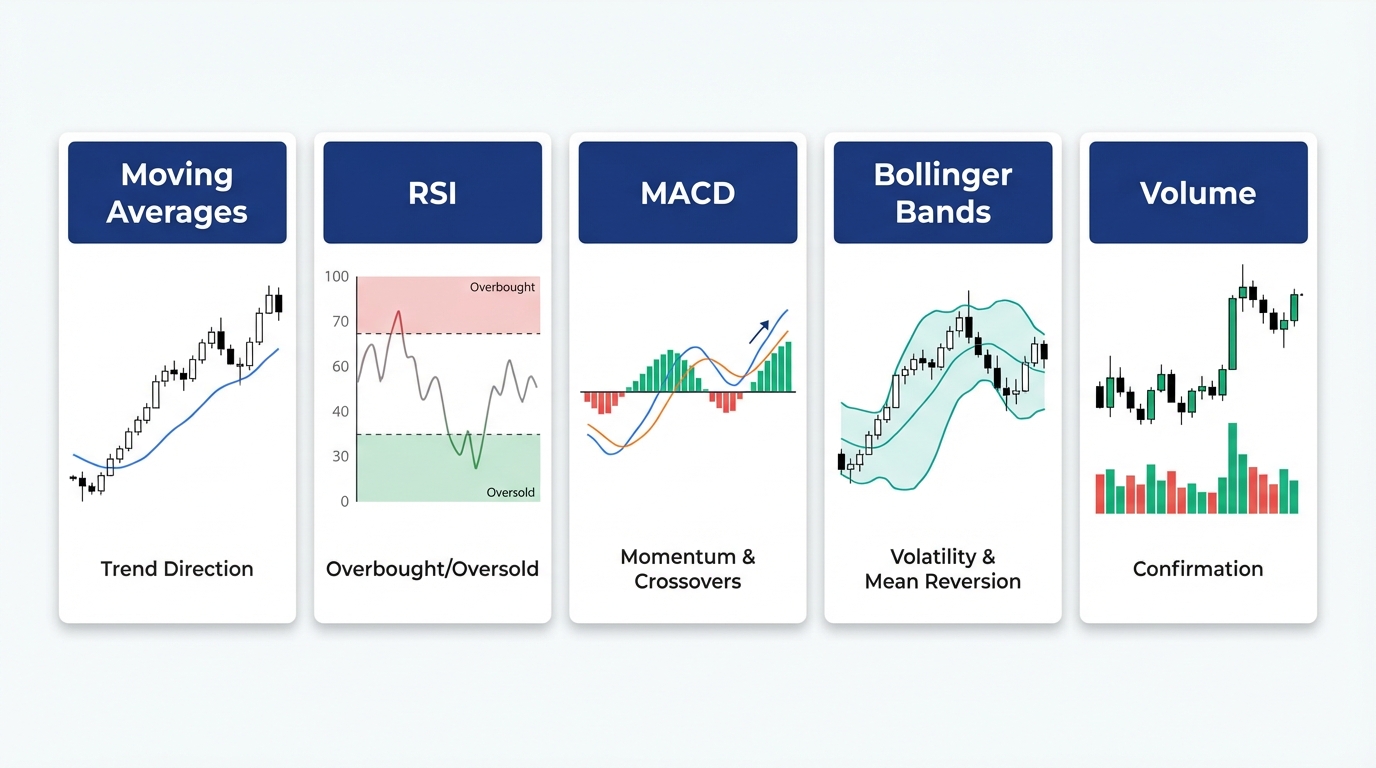
Indicators should support your analysis — not replace it.
You’ll learn how to use:
- moving averages
- RSI
- MACD
- Bollinger Bands
- volume indicators
This section teaches you how to avoid indicator overload and focus on what matters.
Multi‑Timeframe Analysis
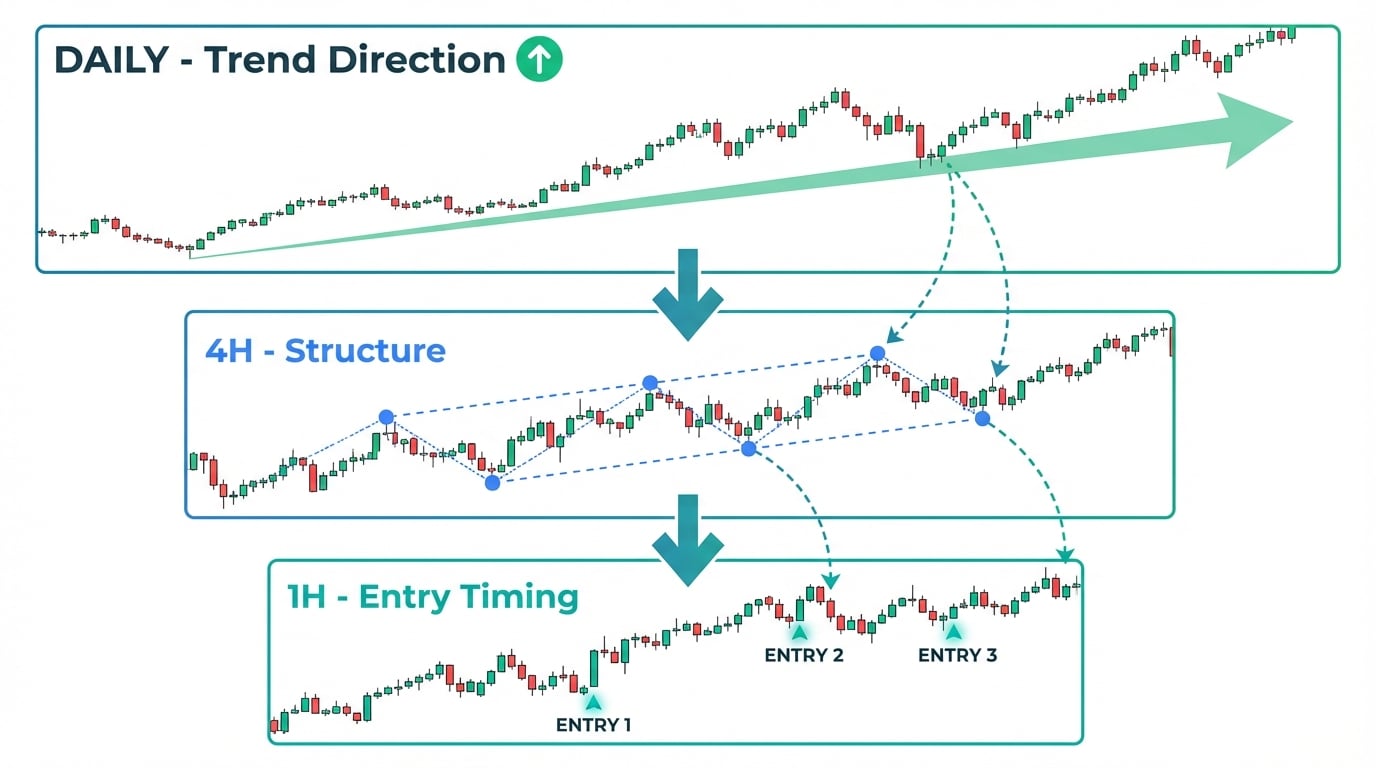
The best traders analyze charts from multiple timeframes.
You’ll learn how to:
- identify the higher‑timeframe trend
- refine entries on lower timeframes
- avoid trading against the bigger picture
- align structure across timeframes
This is how you trade with precision and confidence.
Combining Technicals With Fundamentals
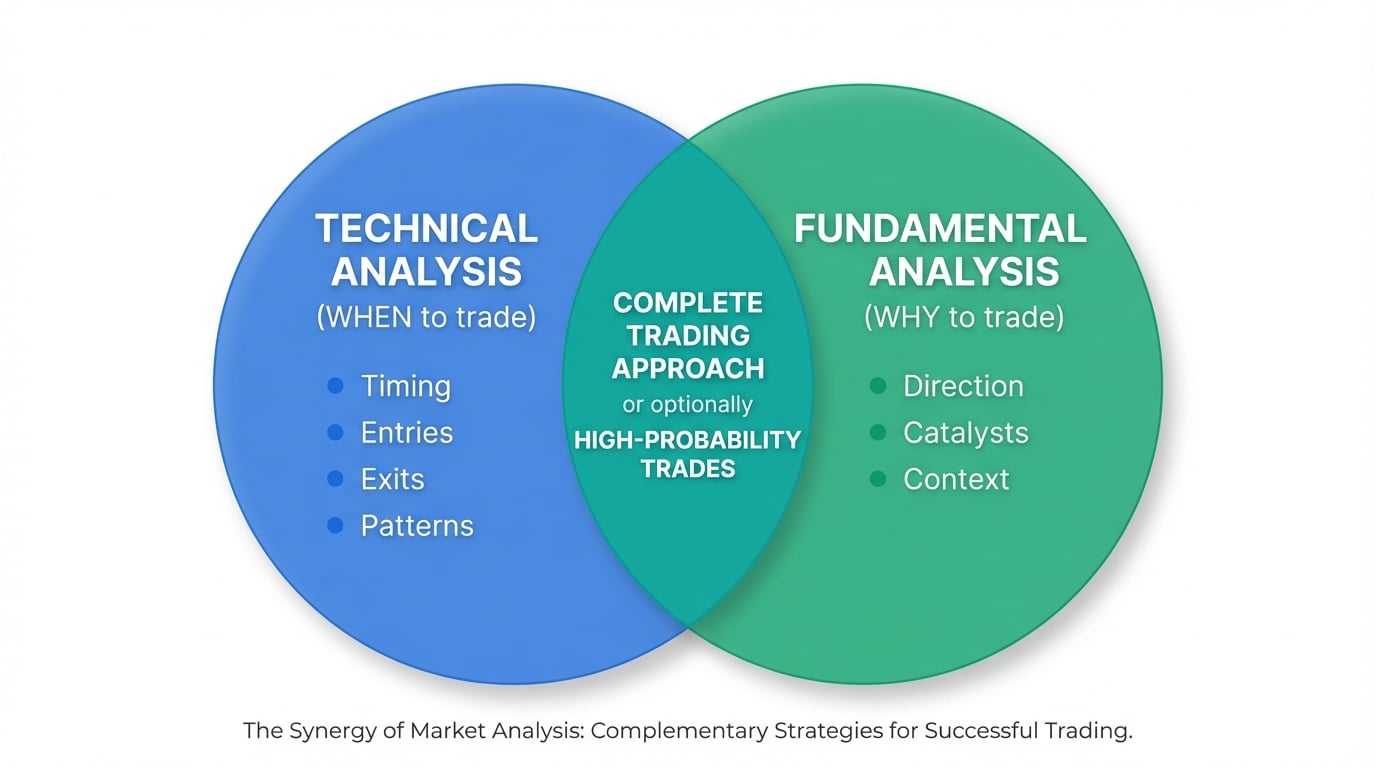
Technical analysis tells you when to trade. Fundamental analysis tells you why the market is moving.
Together, they create a complete trading approach.
Internal Link: → Learn more in our Fundamental Analysis Guide
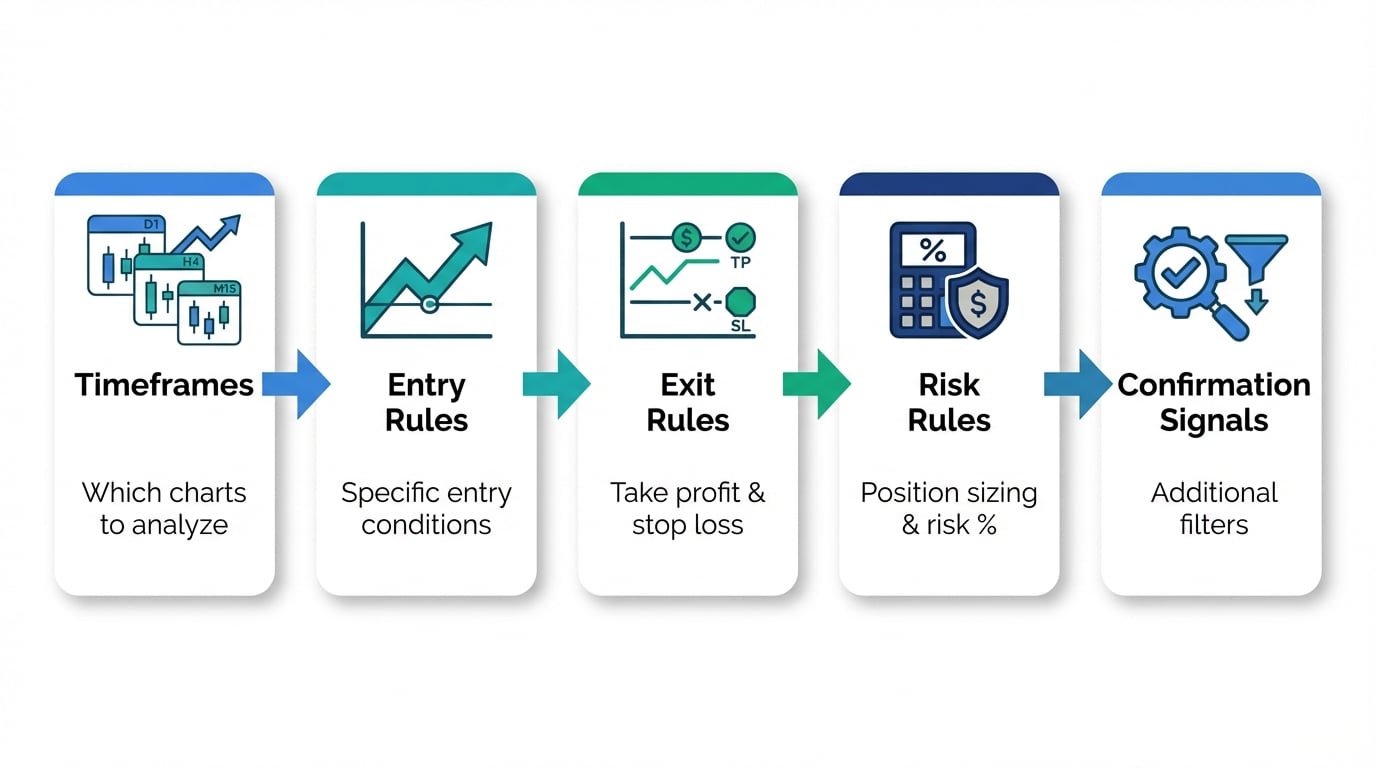
Building a Technical Trading Plan
A strong technical plan includes:
- your preferred timeframes
- your entry and exit rules
- your risk management rules
- your confirmation signals
- your journaling process
This section helps you turn knowledge into a repeatable system.
Next Steps (CTA)
You now understand the core tools and principles of technical analysis. Your next step is to combine these skills with fundamentals, psychology, and risk management to build a complete trading approach.
CTA Buttons:
Return to Learn Forex
Learn Fundamental Analysis
Start Trading Psychology
Explore Trading Tools
Compare Forex Brokers