Fundamental Analysis: Understand the Economic Forces That Move the Forex Market - Learn how interest rates, inflation, economic data, and central bank policy shape currency trends — so you can trade with deeper insight and stronger conviction.
What Is Fundamental Analysis?
Fundamental analysis helps you understand why currencies move. Instead of focusing on charts alone, you study the economic and political forces that influence supply, demand, and long‑term market direction.
In this guide, you’ll learn:
- the key economic indicators that move currencies
- how central banks influence exchange rates
- how to interpret news events
- how fundamentals and technicals work together
- how to build a macro‑aware trading plan
This is the foundation of long‑term, confident decision‑making.
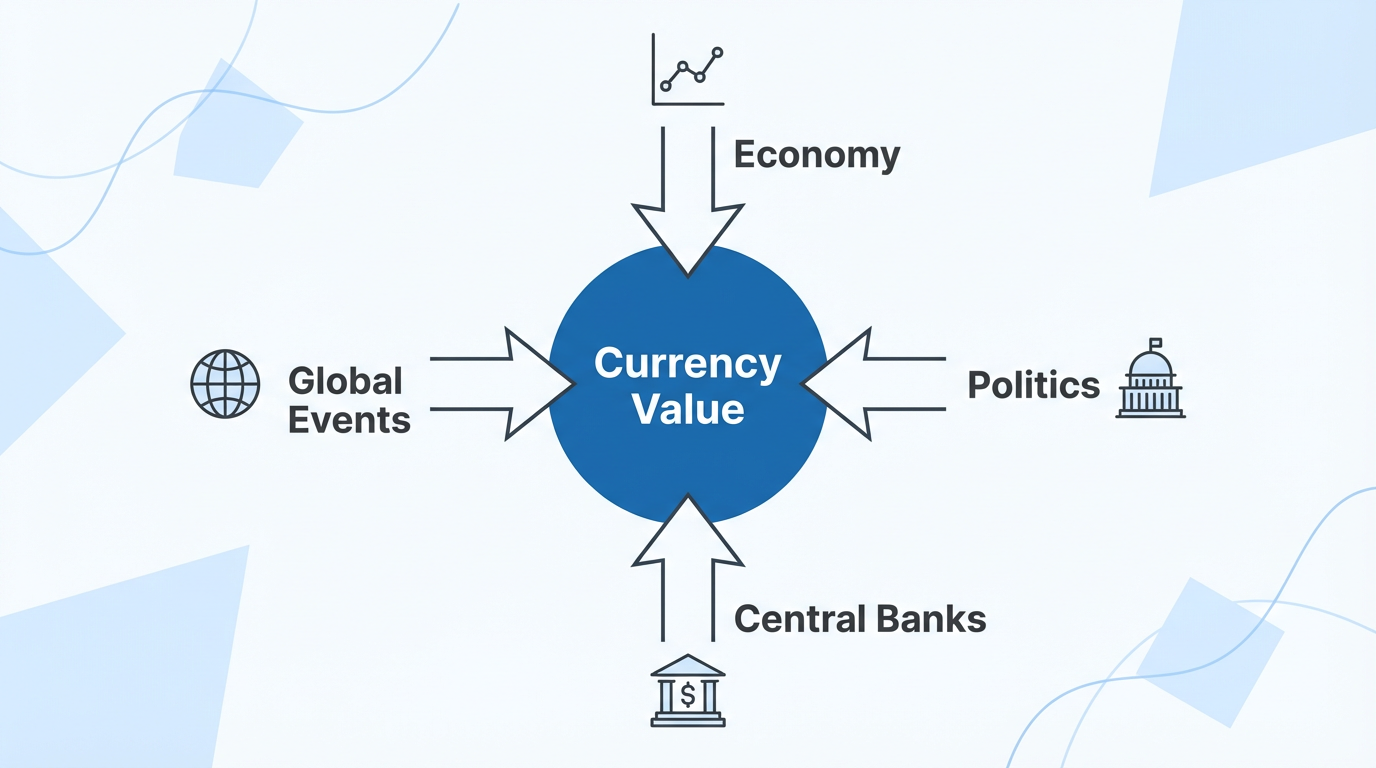
The Core Drivers of Currency Prices
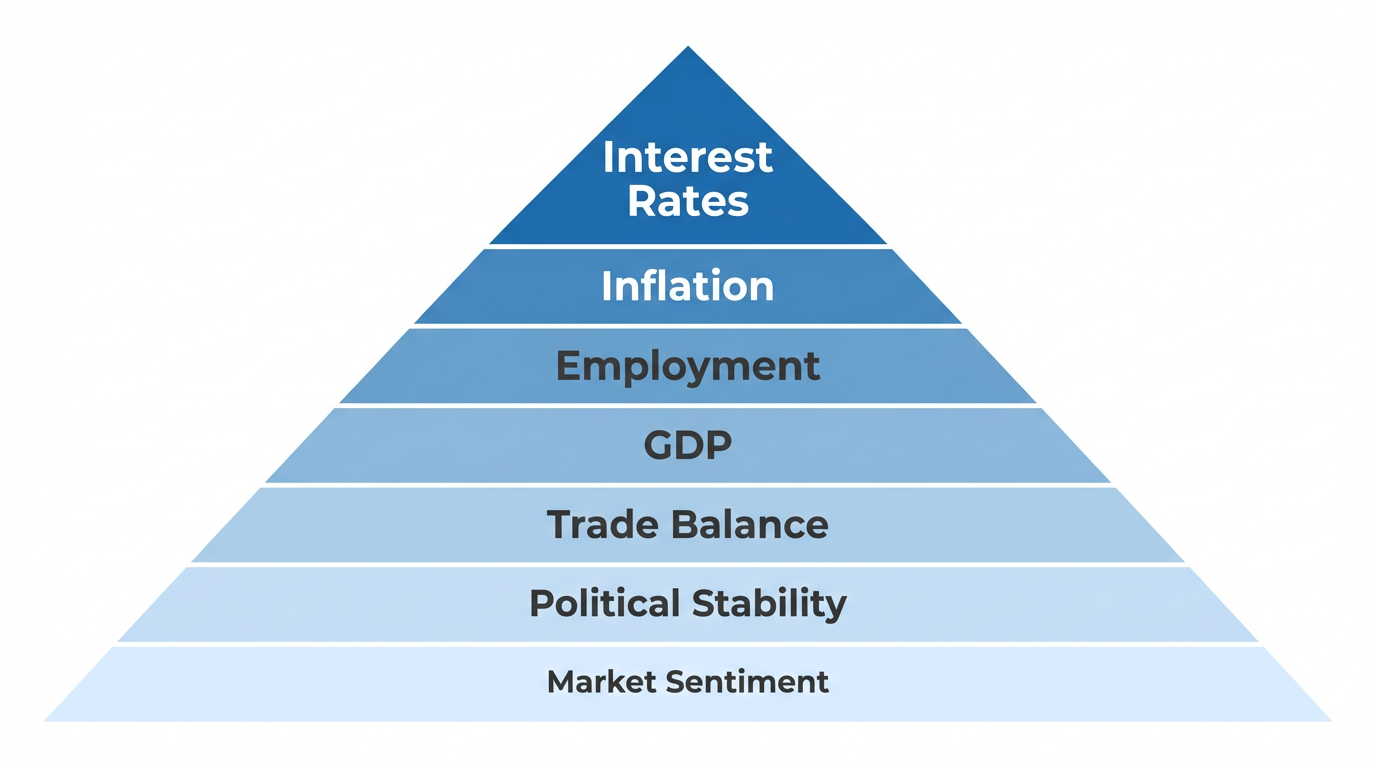
Currencies move because of changes in economic strength and investor expectations. The major drivers include:
- Interest rates
- Inflation
- Employment data
- GDP growth
- Trade balances
- Political stability
- Market sentiment
Each of these factors affects how investors value a currency relative to others.
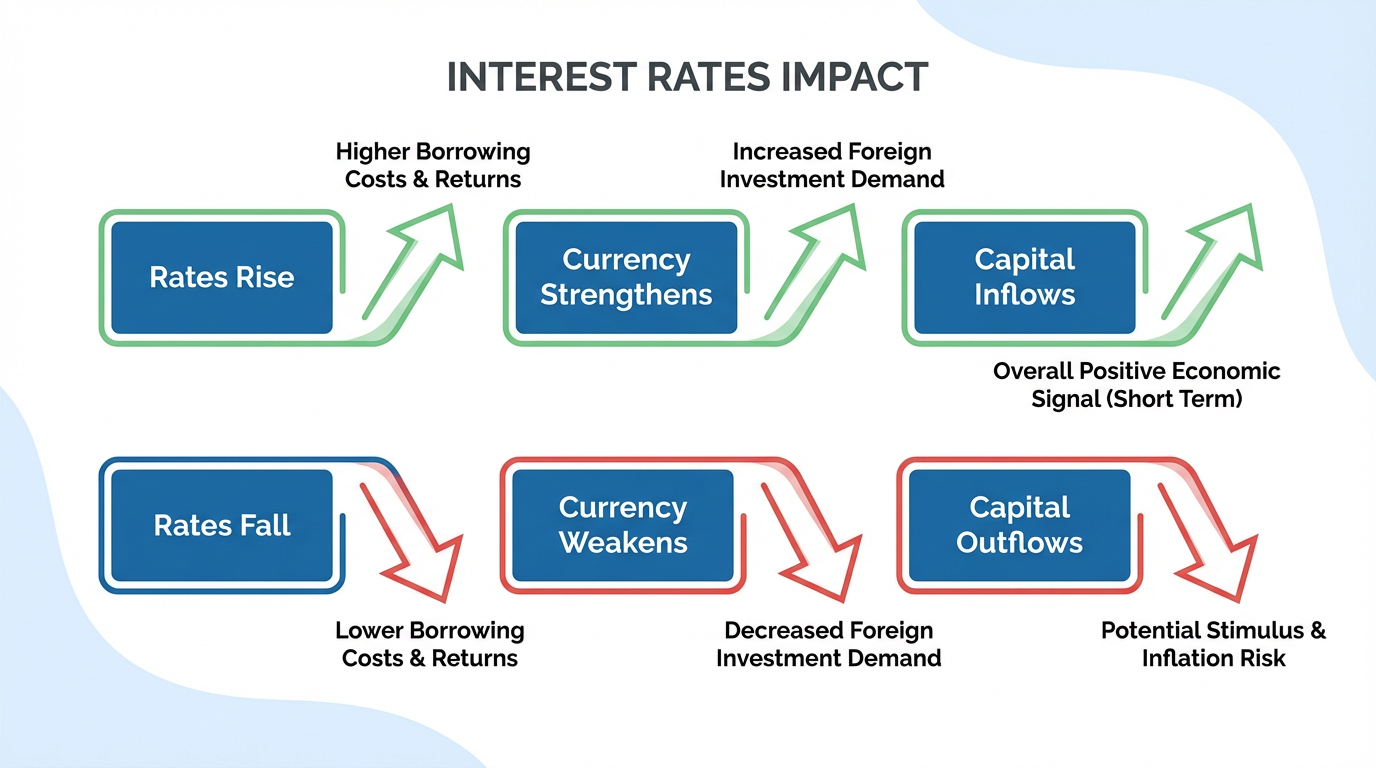
Interest Rates (The #1 Market Driver)
Interest rates are the most powerful force in Forex.
When a central bank raises rates:
- the currency typically strengthens
- investors seek higher returns
- capital flows into that economy
When rates fall:
- the currency often weakens
- investors look for better yields elsewhere
Understanding rate expectations is essential for anticipating long‑term trends.
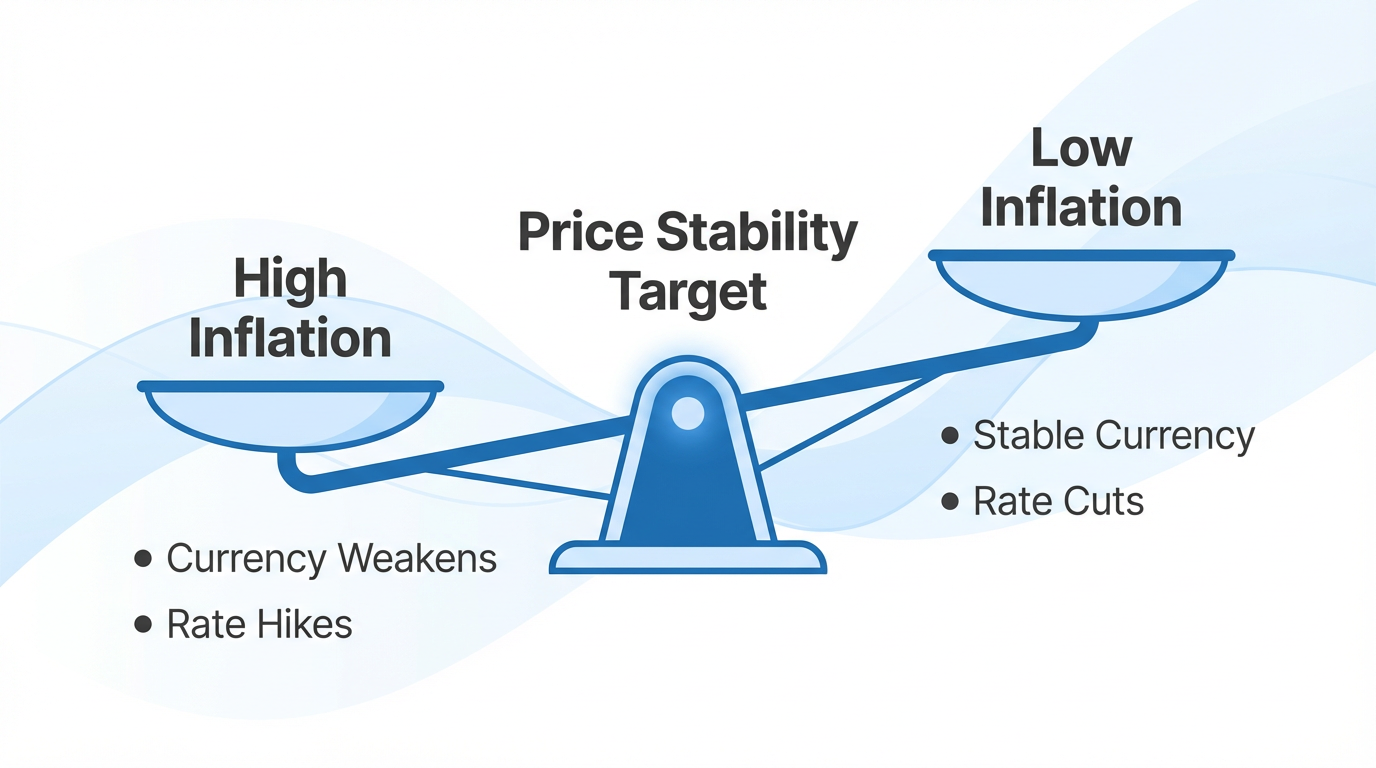
Inflation and Price Stability
Inflation affects purchasing power and central bank decisions.
High inflation:
- pressures central banks to raise rates
- can weaken a currency if uncontrolled
Low inflation:
- signals stability
- may lead to rate cuts
This section helps traders interpret CPI releases and inflation trends.
Economic Indicators You Must Know
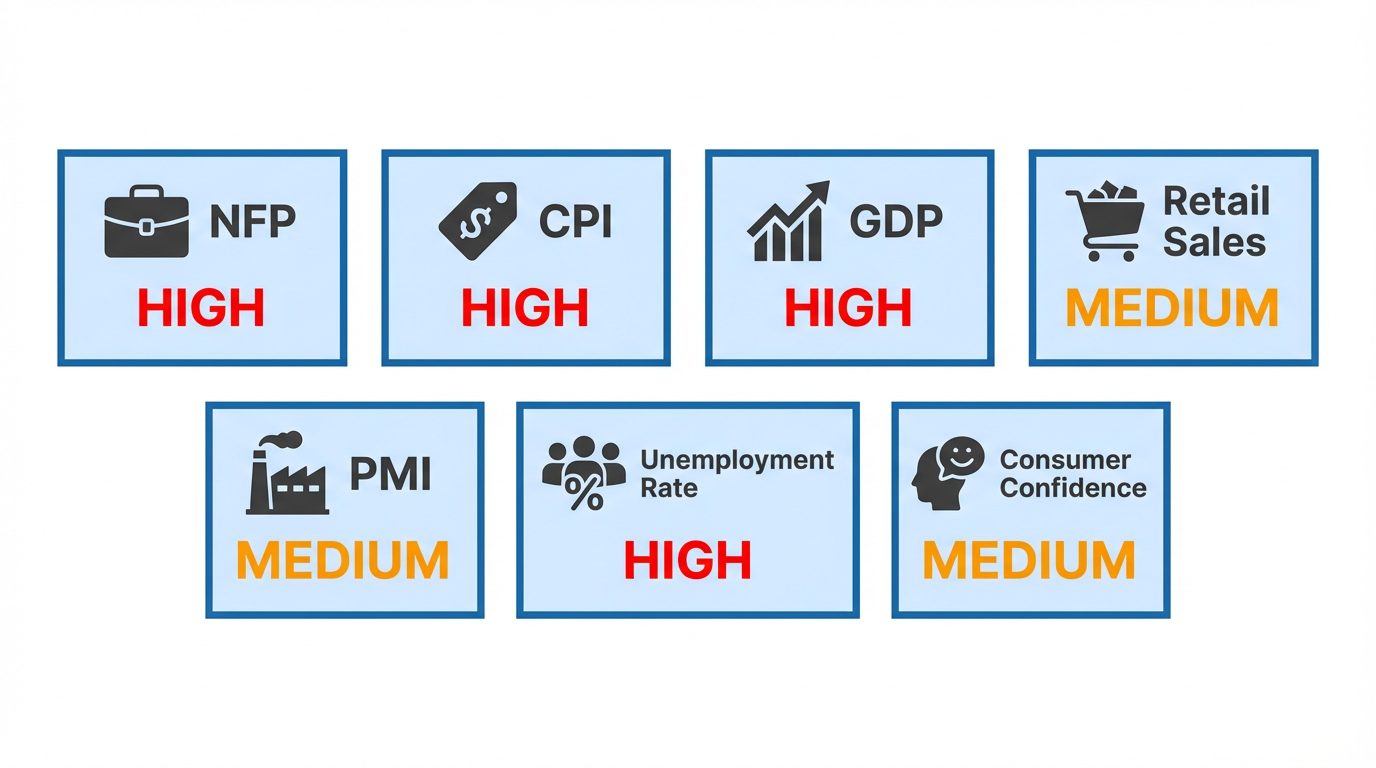
These reports move the market instantly:
- Non‑Farm Payrolls (NFP)
- CPI (Inflation)
- GDP growth
- Retail sales
- PMI (manufacturing & services)
- Unemployment rate
- Consumer confidence
You’ll learn what each report means, why it matters, and how traders react.
Central Banks and Monetary Policy
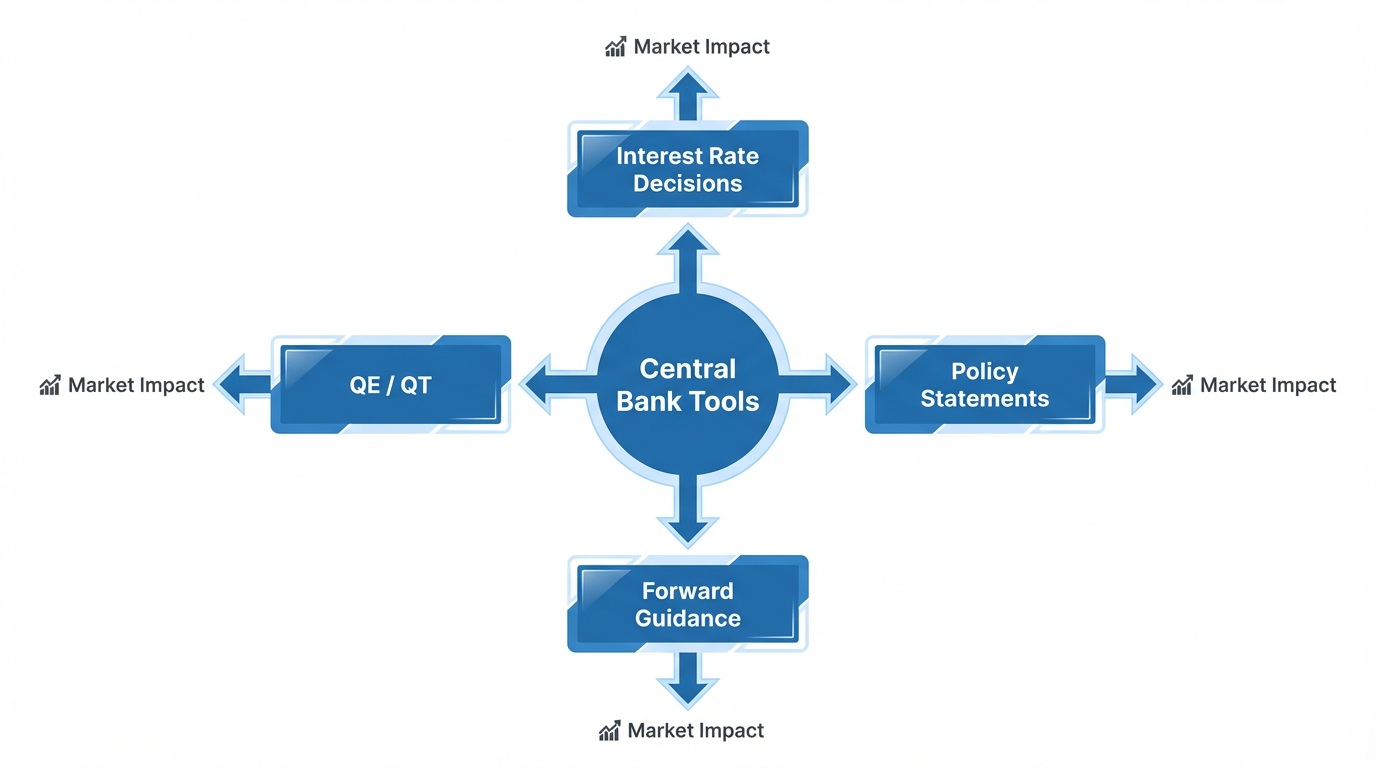
Central banks shape currency value through:
- interest rate decisions
- forward guidance
- quantitative easing/tightening
- policy statements
- press conferences
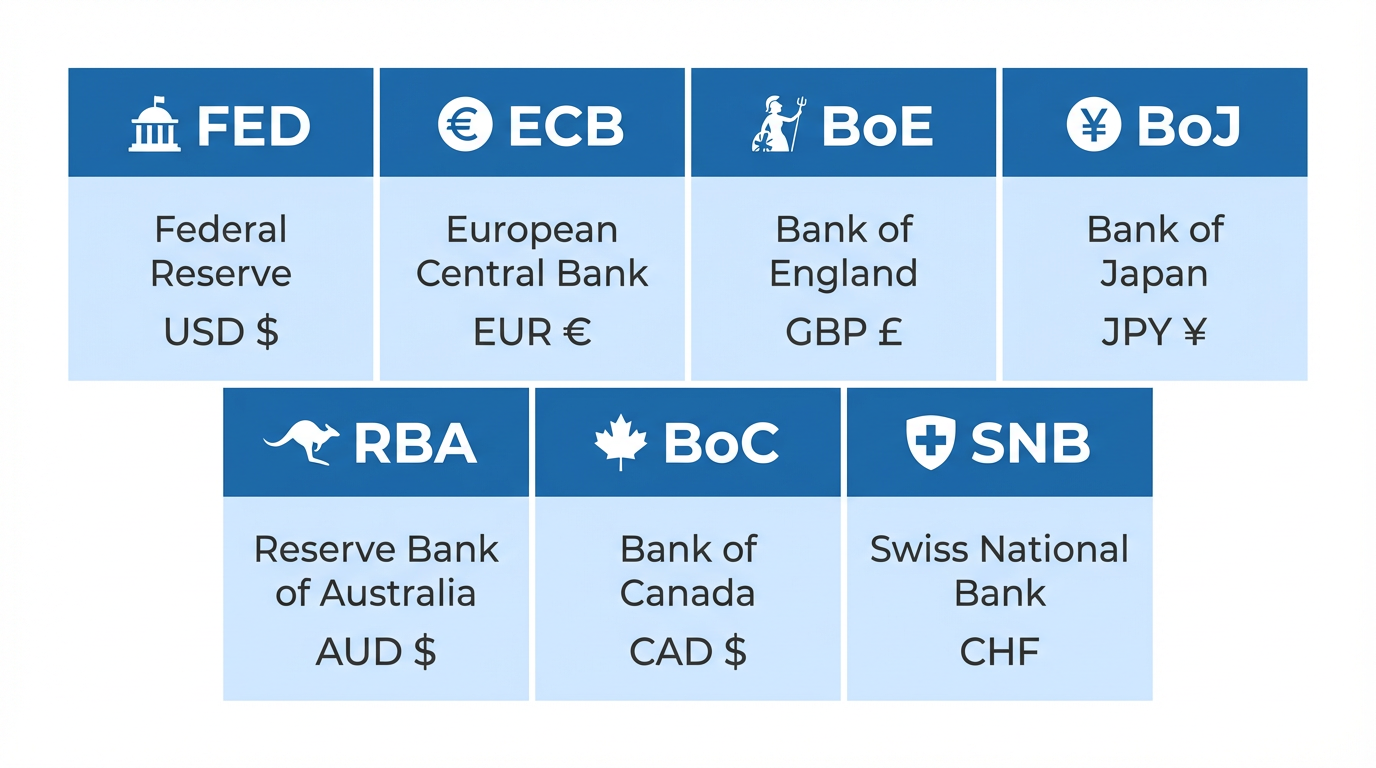
Major central banks include:
- Federal Reserve (USD)
- ECB (EUR)
- Bank of England (GBP)
- Bank of Japan (JPY)
- Reserve Bank of Australia (AUD)
- Bank of Canada (CAD)
- Swiss National Bank (CHF)
Understanding their tone and direction gives you a major trading edge.
Geopolitics and Market Sentiment
Currencies react to:
- elections
- wars
- trade tensions
- natural disasters
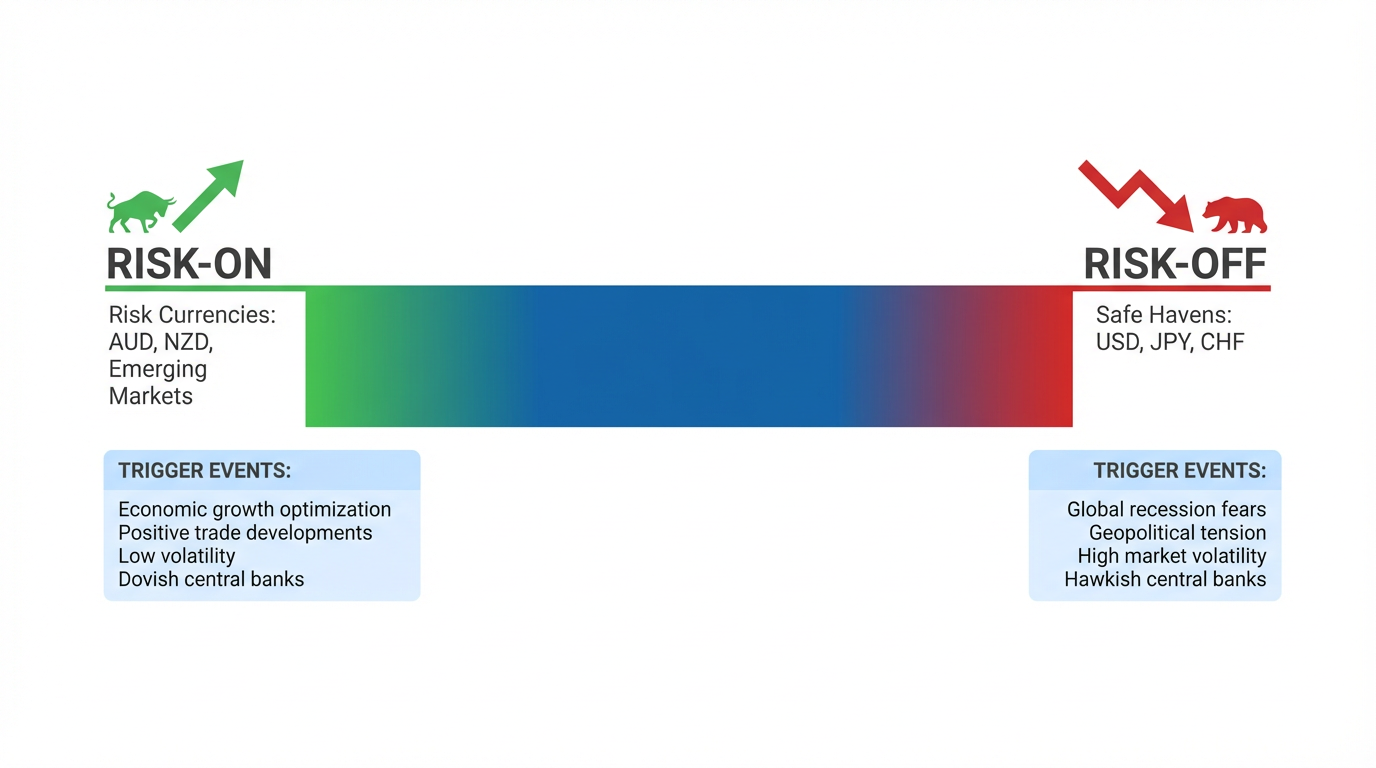
- global risk appetite
Risk‑on vs. risk‑off sentiment can shift markets even without economic data.
How Fundamentals and Technicals Work Together
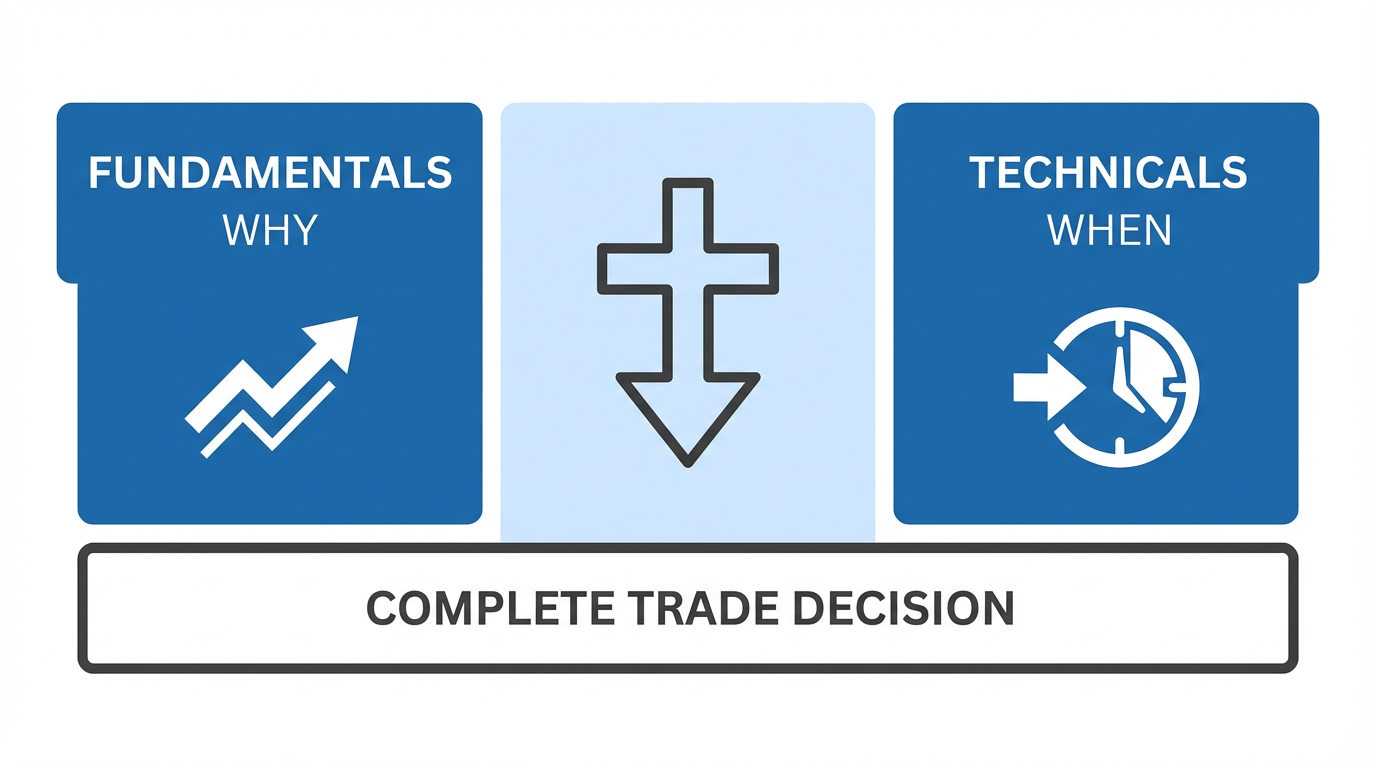
Fundamentals explain why the market moves. Technicals help you decide when to enter and exit.
Together, they create a complete trading approach.
Internal Link: → Explore our Technical Analysis Guide
Using the Economic Calendar
A trader’s best friend.
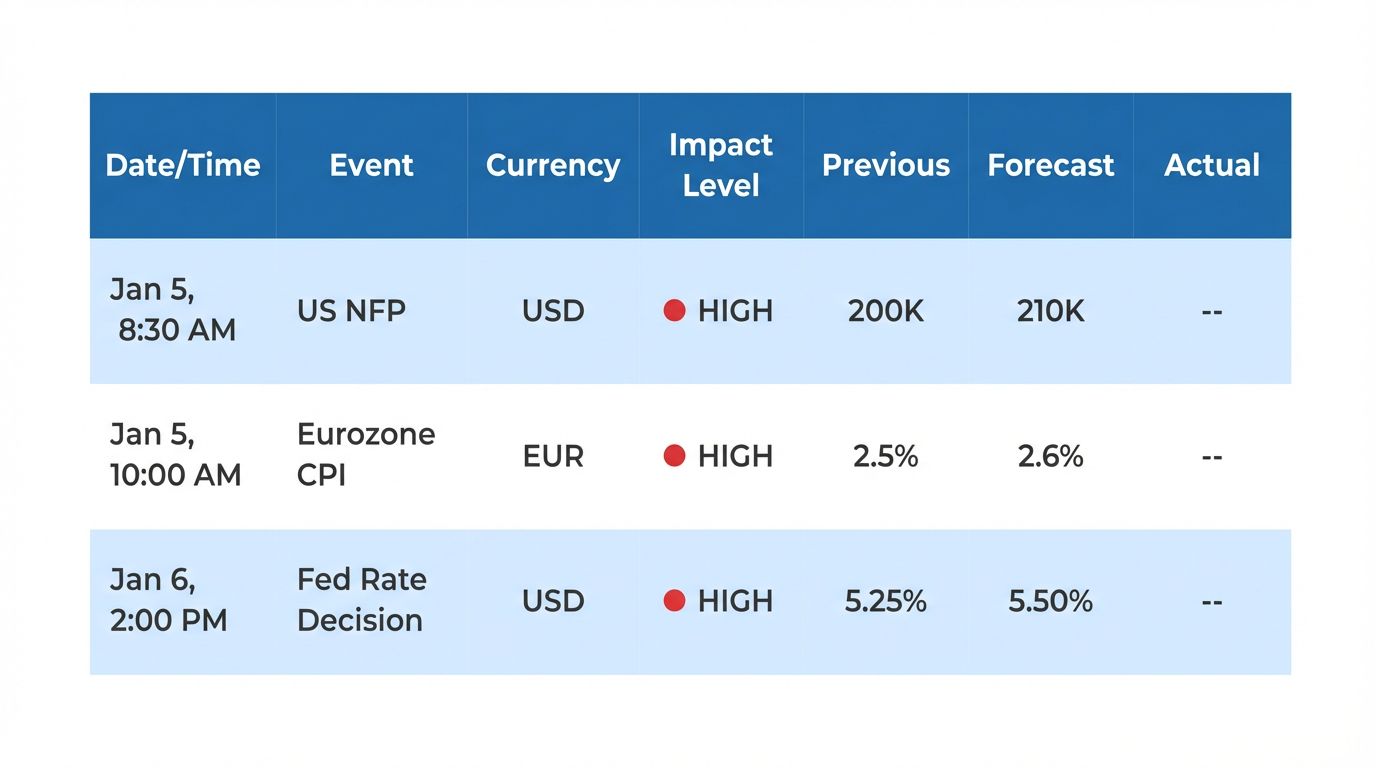
You’ll learn how to:
- read upcoming events
- understand impact levels
- prepare for volatility
- avoid trading during high‑risk moments
- position yourself ahead of major releases
This section helps you stay informed and avoid surprises.
Building a Fundamental Trading Plan
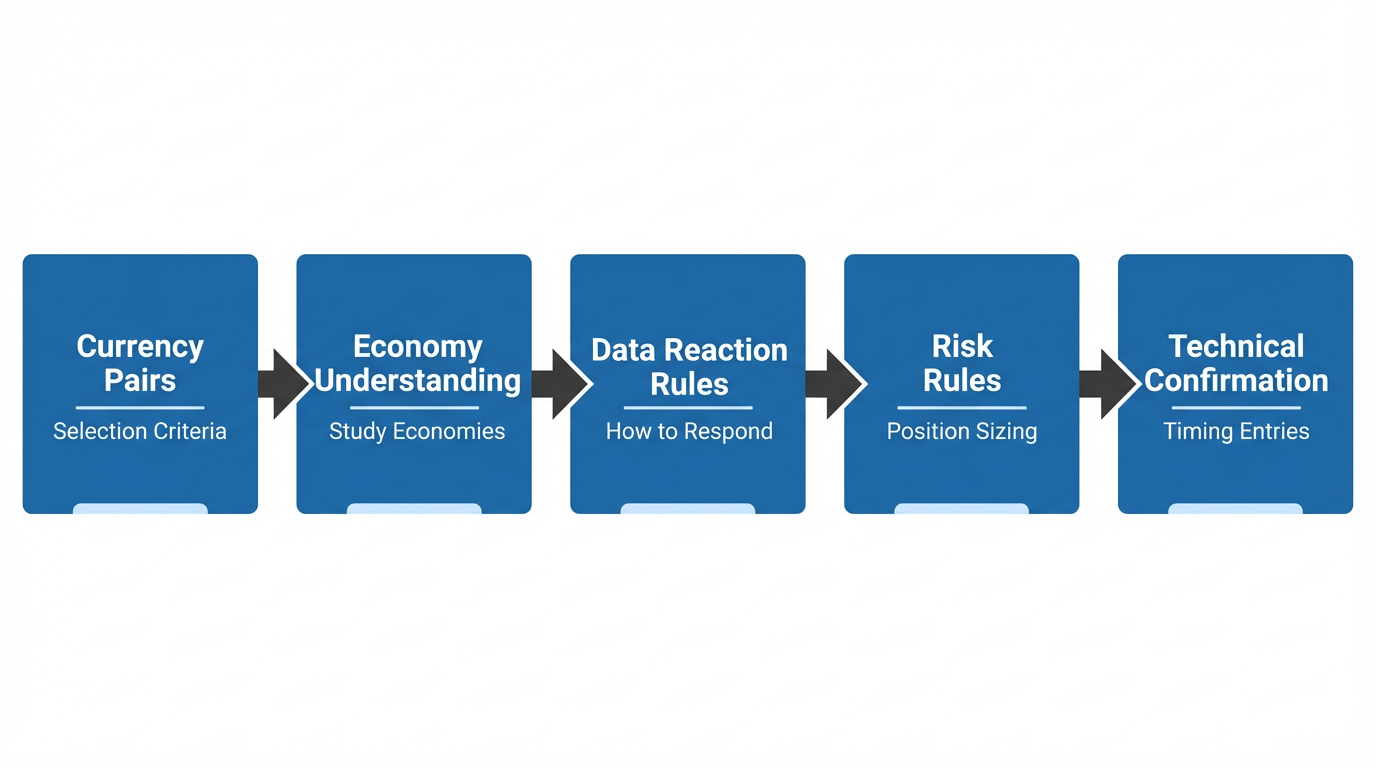
A macro‑aware plan includes:
- your preferred currency pairs
- your understanding of each economy
- your reaction to major data releases
- your risk rules
- your technical confirmation signals
This helps you trade with confidence instead of reacting emotionally.
Next Steps (CTA)
You now understand the economic forces that drive the Forex market. Your next step is to combine this knowledge with technical analysis, psychology, and risk management to build a complete trading approach.
CTA Buttons:
Explore Trading Tools
Start Technical Analysis
Learn Forex Basics
Compare Forex Brokers
Master Trading Psychology