Understanding Forex Leverage and Margin. How Forex Leverage Amplifies Trading Power
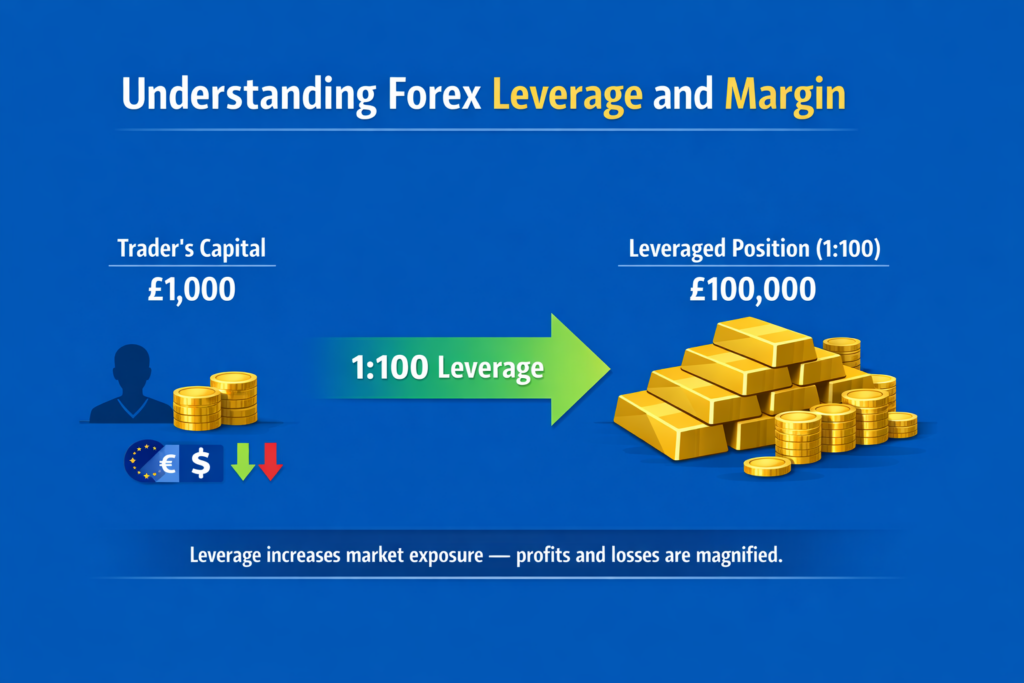
Leverage is one of the most powerful — and dangerous — features of forex trading. It allows you to control a large position with a small amount of capital, but it also increases your exposure to risk.
Forex leverage and margin are two of the most important — and misunderstood — concepts in trading. They allow traders to control larger positions with a smaller amount of capital, but they also increase risk dramatically. Used correctly, leverage can enhance your trading efficiency. Used carelessly, it can wipe out your account in minutes.
This guide breaks down how leverage and margin work, why they matter, and how to use them safely as part of a disciplined trading plan.
What Is Forex Leverage?
Leverage allows you to control a large position with a relatively small deposit. It is expressed as a ratio, such as:
- 1:10
- 1:50
- 1:100
- 1:500
Example
If your broker offers 1:100 leverage, you can control £10,000 with just £100 of your own capital.
Leverage magnifies everything:
- Profits
- Losses
- Emotions
- Risk
This is why professional traders often use less leverage than beginners.
How Leverage Works
If your broker offers 1:100 leverage, you can control £10,000 with just £100 of margin.
- High leverage = higher risk
- Low leverage = more control
Professional traders typically use lower leverage than beginners.
What Is Margin? Forex Margin Explained – Opening and Maintaining a Trade
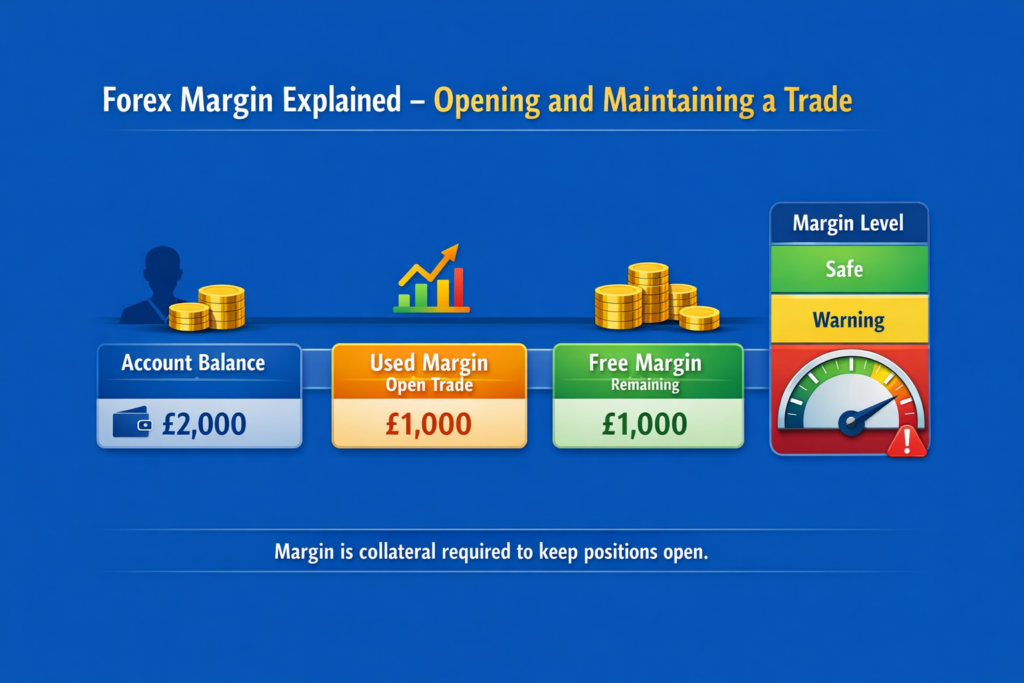
Margin is the amount of money your broker locks in your account to keep a leveraged position open. It is not a fee — it’s a security deposit. You cannot have good forex leverage without a healthy margin.
If your account equity falls too low, you may receive a margin call — or your broker may close your trade automatically.
Types of Margin
- Initial Margin: Required to open a trade
- Maintenance Margin: Required to keep the trade open
- Free Margin: Funds available to open new trades
- Used Margin: Funds currently tied up in open positions
If your equity falls below the maintenance margin, you may face a margin call.
Forex Leverage: How Leverage and Margin Work Together
Leverage determines how large your position can be. Margin determines how much of your account is required to support that position.
Example
You want to open a £20,000 position with 1:100 leverage.
- Required margin = £200
- If the market moves against you, your equity decreases
- If equity drops too low, your broker may close your trade
This is why risk management is essential.
The Dangers of High Leverage
High leverage is attractive because it promises big profits — but it also brings big risks.
High leverage is attractive because it promises big profits — but it also brings big risks.
1. Faster Losses
A small move against you can wipe out your account.
2. Emotional Pressure
High leverage increases stress, leading to:
- Over‑trading
- Revenge trading
- Impulsive decisions
3. Margin Calls
If your equity drops too low, your broker will close your trades automatically.
4. False Confidence
Beginners often mistake luck for skill when using high leverage.
1. Use Lower Leverage
Beginners should start with:
- 1:5
- 1:10
- 1:20
This keeps risk manageable.
2. Always Use a Stop‑Loss
A stop‑loss protects your account from catastrophic losses.
3. Risk 1–2% Per Trade
Your risk percentage matters more than your leverage.
4. Avoid Trading During High‑Impact News
Leverage + volatility = dangerous combination.
5. Use a Margin Calculator
Know exactly how much margin is required before opening a trade.
How to Use Leverage Safely
Professional traders treat leverage as a tool — not a shortcut.
- Use 1:10 or lower when learning
- Always use a stop‑loss
- Keep your risk per trade under 2%
- Avoid trading during major news events
Understanding Margin Calls – Warning → Margin Call → Stop‑Out
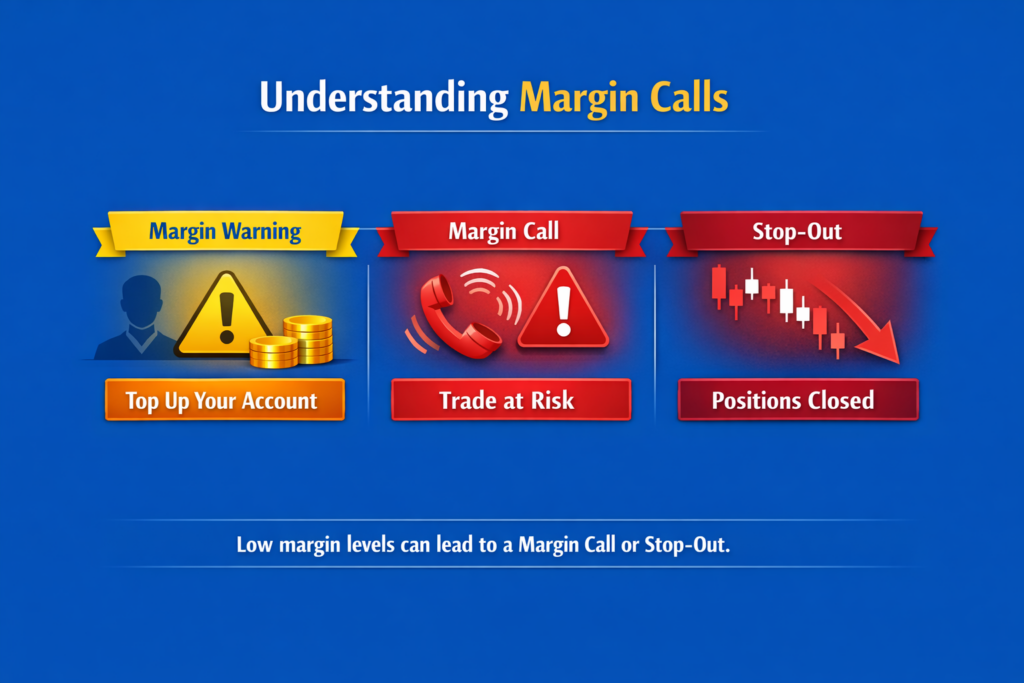
A margin call happens when your account no longer has enough equity to support your open positions. If your account drops below the required maintenance margin, your broker will close your positions to protect you from going negative.
This is why risk management and position sizing matter.
Why Margin Calls Happen
- Over‑leveraging
- No stop‑loss
- Large lot sizes
- Trading during news
- Holding losing trades too long
What Happens During a Margin Call
Your broker may:
- Warn you
- Close your largest losing positions
- Close all positions automatically
This is to prevent your account from going negative.
Real‑World Example
You open a £50,000 position with 1:100 leverage. Your required margin is £500.
If the market moves against you by just 1%, you lose £500 — your entire margin.
This is why leverage must be used with discipline.
How to Choose the Right Leverage
Your ideal leverage depends on:
- Your experience
- Your risk tolerance
- Your strategy
- Your account size
General Guidelines
- Scalpers: 1:50 to 1:100
- Day traders: 1:20 to 1:50
- Swing traders: 1:5 to 1:20
- Beginners: 1:5 to 1:10
Lower leverage = more control.
Forex Leverage Myths Traders Believe
❌ “Higher leverage means higher profits.”
Not true — it means higher risk.
❌ “Margin is a fee.”
Margin is a deposit, not a cost.
❌ “Leverage is dangerous.”
Leverage is neutral — the danger comes from misuse.
❌ “You need high leverage to grow a small account.”
You need discipline, not high leverage.
Final Thoughts
Leverage and margin are powerful tools that can help you trade efficiently — but only when used responsibly. The key is to understand how they work, manage your risk, and avoid the emotional traps that high leverage creates.
Master forex leverage, and you gain control. Misuse it, and the market will teach you expensive lessons.
Recommended Internal Links
- What Is Risk Management in Forex?
- Broker Reviews
- Margin Calculator