
In this guide, we break down the five core emotions that control traders — fear, greed, FOMO, revenge trading and overconfidence — and how to master them so you can trade with clarity and discipline.
1. Fear
Fear is one of the most common forex trading emotions that influence traders. It can protect you from danger, but in the markets, it often works against you. Fear causes hesitation, doubt, and premature exits, especially when a trader has recently experienced a loss.
How fear shows up
- Fear of losing money
- Fear of missing out on a move
- Fear of entering a trade
- Fear of being wrong
Management your emotions in forex here: What Is Risk Management in Forex?
How fear damages performance
- Closing trades too early
- Skipping valid setups
- Over‑protecting losing trades
- Hesitating at key moments
How to control fear
- Reduce your position size
- Use predefined risk per trade
- Follow a written trading plan
- Accept that losses are part of the game
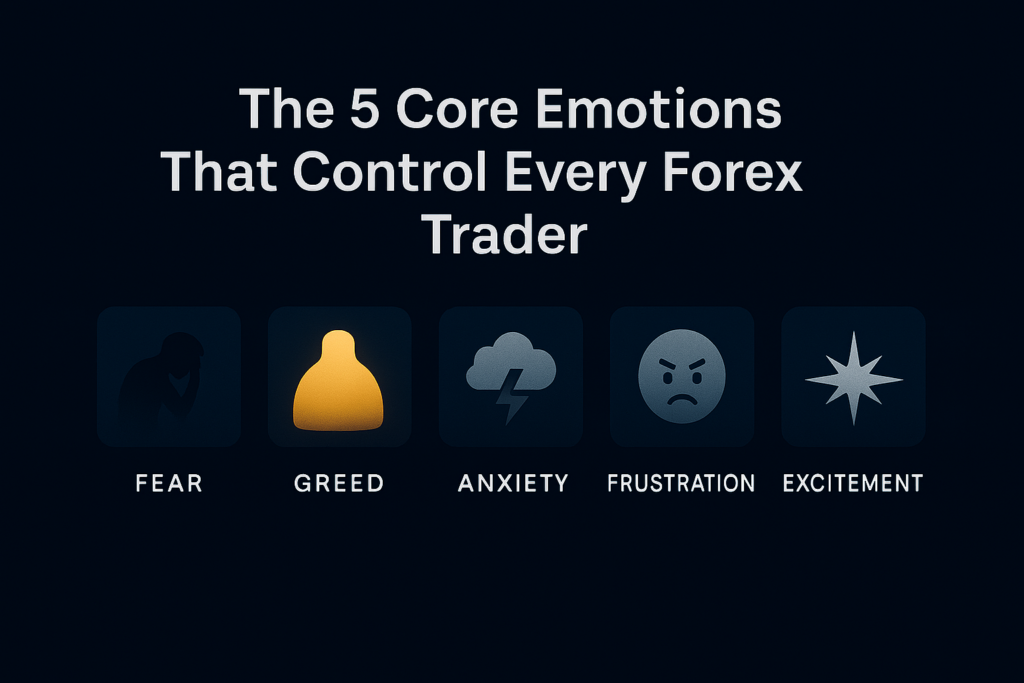
2. Greed
Greed is another common forex trading emotions that pushes traders to chase unrealistic returns. It often appears after a winning streak or when a trader feels pressure to “make money fast.” Greed convinces traders that the market will keep moving in their favour, even when the chart says otherwise.
How greed shows up
- Over‑leveraging positions
- Adding to losing trades
- Holding winners too long
- Ignoring risk rules
You can learn more from here/position-sizing-explained/
How to control greed
- Set realistic profit targets
- Stick to your risk‑reward ratio
- Focus on consistency, not jackpots
- Avoid trading when emotional
3. FOMO (Fear of Missing Out)
FOMO is one of the most destructive forex trading emotions in Forex. It convinces traders that every move is “the one,” leading to impulsive decisions and poor entries. FOMO is especially common during strong trends or after seeing others post profits.
How FOMO shows up
- Entering trades late
- Chasing breakouts
- Taking setups outside your plan
- Trading without confirmation
How to control FOMO
- Accept that you will miss trades
- Focus on high‑probability setups
- Reduce unnecessary screen time
- Trust your strategy and process
4. Revenge Trading
Revenge trading happens after a loss — especially a painful one. The trader feels the need to “win it back” quickly, which leads to emotional, impulsive decisions. This is one of the fastest ways to blow an account.
Signs of revenge trading
- Suddenly increasing lot size
- Taking random trades
- Ignoring your trading rules
- Trading out of frustration
Learn more forex trading psychology: Trading Psychology
How to stop revenge trading
- Step away from the charts after a loss
- Set a daily drawdown limit
- Review your journal before trading again
- Reset your mindset before re‑entering the market
5. Overconfidence
Overconfidence usually appears after a winning streak. It tricks traders into believing they have “figured out the market,” leading to reckless decisions. Overconfidence is among the dangerous forex trading emotions, because it feels positive — but it blinds traders to risk.
How overconfidence hurts traders
- Oversized positions
- Ignoring risk management
- Breaking your own rules
- Believing you “can’t lose”
How to control overconfidence
- Keep position sizes consistent
- Stick to your trading plan
- Review your journal weekly
- Stay humble — the market punishes ego
Why Mastering Forex Trading Emotions Matters
Psychology determines your discipline, consistency, and long‑term survival in the Forex market. A trader with an average strategy but strong emotional control will outperform a trader with a great strategy but weak discipline. Forex trading emotions mastery allows you to follow your plan, manage risk properly, and stay calm during volatility.
Conclusion
Mastering forex trading emotions is the foundation of professional trading. Once you understand how these five emotions influence your decisions, you can build the discipline needed to trade with clarity, confidence and consistency. The market rewards emotional control far more than technical knowledge alone.